Zebrafish
2 Photo Gallery

1 Species Overview
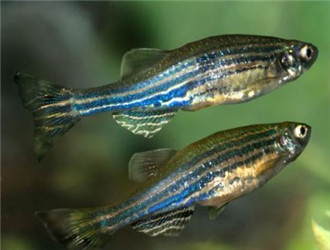
The zebrafish has deep-blue stripes on both sides with silver or gold streaks; combined with planted tanks, a school looks like zebras running on a plain – hence the name.
Chinese name: Zebrafish
Distribution: Streams of Bangladesh, India, Pakistan, Myanmar, Nepal
Phylum: Chordata
Order: Cypriniformes
Genus: Danio
Aliases: Blue-striped fish, Striped fish, Blue zebrafish, Indian fish, Indian zebrafish
Subclass: Neopterygii
Binomial: Danio rerio
Kingdom: Animalia
Class: Actinopterygii
Family: Cyprinidae
Species: Danio rerio
Subphylum: Vertebrata
2 Appearance & Physical Traits
Even adults are small, but zebrafish has ornamental value and is now used in research – its transparency lets scientists observe embryonic development. Also used in drug testing.
Adult about 5 cm; males thinner but slightly smaller than females. Extremely gentle, tiny and cute, swims almost all day. Easy to keep, community-friendly. Beyond ornament, its stable genetics make it a good research material for UV, heavy metals, industrial pollution, and radioactivity. Easy to breed, low cost – an excellent lab model.
3 Habitat & Living Environment
Gentle, so community with other small peaceful tropical fish. Adaptable, not hard. What to note?
I. Environment: 1. Temperature: 20-25 C; subtropical freshwater, cold-hardy, survives 10 C (native India/Bangladesh are cool). 2. Prefers soft water: neutral is fine, but soft is better; soft water during breeding raises fertilization and hatch rates. 3. Fry care: newborn pale yellow, heartbeat visible under microscope; lie still on bottom first days, no feeding. Very disease-prone – strengthen management.
II. Breeding: 1. Select stock: start from fry, pick 20-30 well-grown, raise about 4 months for good parents; goal is many quality eggs. 2. Sexing: after months, mature parents easy to sex – silver-gray, plump, soft-bellied = female; flat, slender, lemon-skinned = male. 3. Spawning: separate chosen parents 2-3 days with glass divider so they see each other; then put males:females at 2:1 or 1:1 in spawning tank; each female lays nearly 1000 eggs.
4 Feeding Guidelines
Swims all day, gentle, tiny, not hard. Not picky, simple food meets needs.
Diet simple – natural or prepared both work. Do not feed too often; by food type: standard feed several times daily, live nematodes once daily; amount eaten in 3 minutes; increase frequency around spawning.
Breeding fry water about 25 C; fry start eating 7-8 days after hatching – feed egg-yolk infusoria then small daphnia.