Upside-Down Catfish
2 Photo Gallery

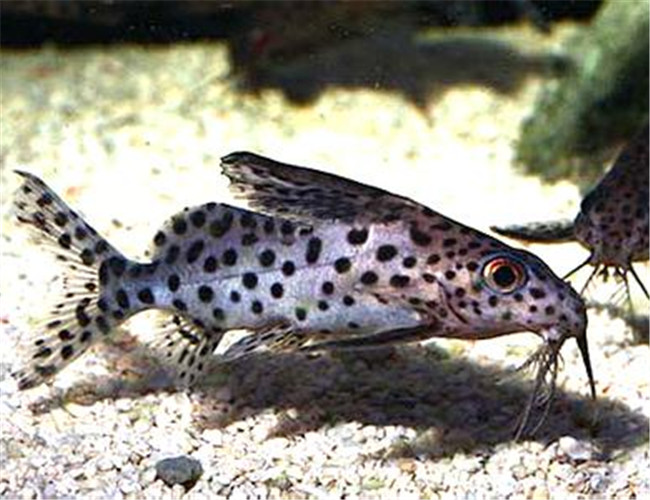
1 Upside-Down Catfish Introduction
Also called the Upside-Down Catfish, it swims upside down as its name says. From West Africa’s Congo River, a tropical catfish, roughly split into ‘river type’ and ‘lake type’.
Alias: Upside-Down Catfish
English name: Upside-Down Catfish
Binomial: Synodontis nigriventris
Origin/Distribution: Central Africa
Adult length: 9.0-10.0 cm
Temperament: Gentle
Temperature: 22.0-26.0°C
pH: 6.0-8.0
Hardness (dGH): 4.0-12.0
Water layer: Bottom
Breeding: Oviparous (egg-laying)
2 Physical Characteristics
Its swimming is special, belly-up. Due to origin/variety/color differences, split into river and lake types, which differ in look and habits.
Usually swims or rests belly-up, large eyes; best with indirect scattered light, 24-25°C, soft water, omnivorous with some plant food. No successful breeding method yet.
1. River type
River types mainly in Nigeria Lake, Niger Lake, and Zaire system, West Africa. Common: Starry Upside-Down Catfish (Synodontis angelicus) and Black-fin Upside-Down Catfish (Synodontis schoutedeni). Very adaptable, low water demands, live and breed in weak alkaline to weak acid.
2. Lake type
Lake types mainly in Tanganyika, Malawi, Victoria lakes, West Africa. Common: Spotted Upside-Down Catfish (Synodontis nyassae) and Victoria Upside-Down Catfish (Synodontis victoriae). Need alkaline hard water or they struggle.
3 Aquarium Conditions
Its biggest trait is belly-up swimming/resting, popular for this. Prefers soft water, but no successful breeding yet.
From Tanganyika, Victoria, Malawi, Nigeria, Niger lakes and Zaire system, Africa. Adult 5-40 cm, water 23-28°C, hardness 6-11 dGH, pH 6.5-8.5. It fights, so provide rocks, roots, driftwood for shelter. Prone to white spot; manage water to avoid sudden changes.
4 Feeding Guidelines
Popular for its unusual upside-down, fast backstroke swimming.
Both river and lake types are similar omnivores, eating algae, plants, small fish/shrimp, insects, live foods, and prepared feeds. It fights, so provide shelter (rocks, roots, driftwood).