Search Results
559 results for “wet food”

Japanese Bobtail
The Japanese Bobtail, also known as the Lucky Cat (Maneki-neko), is very popular in Japan. Cat lovers, upon hearing 'lucky,' want one. It is a native Japanese breed with a history tracing back centuries. Bred in the US after introduction, it is said an American cat lover in Japan found a cat with a short rabbit-like tail and brought several back after WWII; these are the ancestors. The Japanese Bobtail sits with one front paw raised, said to represent good fortune.

Persian
The Persian cat, also called Persian, Chinchilla, or Himalayan, with the Latin name Persian, represents nobility in people's minds. In China, most people's first pet cat was a Persian. However, most kept Persians are not purebred but non-purebred bred by merchants to meet the market; purebred Persians cost over a thousand dollars. Originating in Persia (Iran), it was developed in Britain over more than 100 years from Afghan longhair and Angora cats.
I am a boarding student and left my hamster with my parents. When I got home today I found my hamster suddenly like this—at first I thought its eyes were gone, but the eyes can still open a little and a cotton swab can’t wipe it off; runny diarrhea is stuck to its rear and its weight dropped a lot, visibly very thin and severe. How should I handle this?
Based on your description—eyes that will not open, increased discharge, diarrhea, and severe weight loss—your hamster may have a digestive disease, most seriously wet tail. This is often caused by poor care and an unclean environment that lets bacteria infect an immunocompromised hamster, and the disease can be fatal, so seek veterinary care promptly.
My Syrian Hamster’s Belly Suddenly Swelled Like a Balloon with Diarrhea; What Is Wrong?
A suddenly swollen, balloon-like belly may come from overeating, food impaction, or gas. Stop feeding and give digestive enzymes; if no improvement, see a vet.

Nanday Parakeet
If someone asks you the representative bird species of the Pantanal, answering Nanday Parakeet will meet no objection. Although some choose them as pets, not everyone likes them — local farmers are at odds with them, mainly because the Nanday Parakeet eats crops and directly reduces yields.

Campbell’s Dwarf Hamster
The Campbell's dwarf hamster is the most short-tempered of the hamsters, and looks very similar to the three-lined (Djungarian) hamster, with little individual difference. Some Campbell's dwarf hamsters have red eyes.

Eurasian Skylark
The Eurasian Skylark has about 75 species worldwide, mainly distributed in the Old World, with only the horned lark native to the New World. The skylark's beak varies greatly in form depending on the species.

Britannia Petite
The Britannia Petite is one of the smallest domestic rabbit breeds, preserved through selective breeding and prized for its petite, alert, upright posture. Originating in England and Poland, it is an active, lively companion rabbit that needs careful feeding and a clean, well-lit environment.
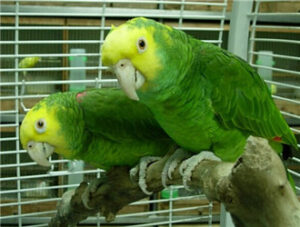
Double Yellow-headed Amazon
The Double Yellow-headed Amazon is a striking parrot with a yellow head, native to Central America and Mexico. A strong talker and affectionate pet, it is now threatened in the wild by habitat loss and trapping, with some subspecies listed as protected.

Gray Chestnut Rabbit
The Gray Chestnut Rabbit was originally bred for high-quality fur but is now also kept as a pet. An artificial breed with a coat close to that of a wild rabbit—unusual among fur breeds—it was developed in France by breeder M.J. Dybowski, first shown in 1913, and is today a rare breed on the brink of extinction.