Gray Chestnut Rabbit
2 Photo Gallery

1 Gray Chestnut Rabbit Breed Overview
The Gray Chestnut Rabbit was originally used to produce high-quality fur, but in recent years many people have kept it as a pet rabbit. It is an artificial breed, yet its coat color is close to that of a wild rabbit—a color that is rare and of high quality among fur-rabbit breeds. The Gray Chestnut Rabbit originated in France and was developed by breeder M.J. Dybowski. It was first exhibited in 1913 and is said to have been produced by crossing the Himalayan Rabbit, the Blue Beveren Rabbit, and the wild rabbit. It was introduced to the United States in 1919 and was formerly known as the Heavyweight American Gray Chestnut Rabbit, raised for meat and fur. It is currently a rare breed, nearing extinction.
2 Physical Characteristics of the Gray Chestnut Rabbit
Gray Chestnut Rabbit (details)
The Gray Chestnut Rabbit is a relatively large breed, usually raised for rabbit meat and fur, but because of its appealing looks and gentle temperament, many people also buy it as a pet rabbit. Its appearance resembles a wild rabbit, probably because wild-rabbit genes were introduced during breeding.
I. Physical Features of the Gray Chestnut Rabbit
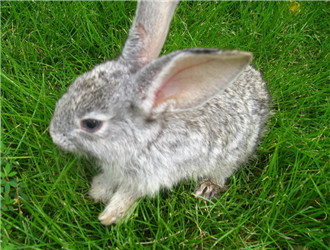
The Gray Chestnut Rabbit’s coat color is very close to that of a gray squirrel; its fur is soft and smooth, the best of all breeds. Males can reach 9–10 jin (about 4.5–5 kg), females 10–12 jin (about 5–6 kg), averaging 7 kits per litter. Because of its large size it is jokingly called the “rabbit pig.” It has broad, upright ears, large round eyes, a short face, a more developed hindquarters than forequarters, and relatively short limbs, making the body look rounder.
II. Buying a Gray Chestnut Rabbit
Gray Chestnut Rabbits sold on the street that are no bigger than your palm, or about that size, are generally 15–20 days old, with a few 25 days old. Those sold in pet shops—ask the shopkeeper. The Gray Chestnut Rabbit was not originally bred as a pet, but because of its very gentle nature many people now keep it as a pet. Its soft fur is very comfortable and makes you want to cuddle it.
3 Gray Chestnut Rabbit Care Tips
Gray Chestnut Rabbit (details)
When keeping the Gray Chestnut Rabbit as a pet, grooming must be done carefully and on a fixed schedule—bathing, coat trimming, and nail clipping—to ensure healthy, comfortable growth. The care points are introduced below.
I. Bathing the Gray Chestnut Rabbit
In fact, a Gray Chestnut Rabbit can go its whole life without a bath, but if the fur is very dirty or has stains that cannot be wiped off, consider bathing it. Use a professional, gentle pet shampoo and wet-wash the whole body; keep the head and ears dry, and rinse the rear (anal) area especially thoroughly. Bathe when the temperature is suitable and dry promptly with a blow dryer to avoid chills and colds.
II. Cleaning with Dry Shampoo
Compared with bathing, cleaning with dry shampoo powder is much more convenient for the Gray Chestnut Rabbit, avoiding many of bathing’s drawbacks, so you can clean it regularly. Use a small-animal-specific dry shampoo powder, sprinkle it all over the body, then comb out excess and any dirt.
III. Trimming the Coat
Coat trimming is optional, since the Gray Chestnut Rabbit’s fur does not grow especially long, but in hot summer or during heavy shedding in spring and autumn you can choose to trim it. Note that the fur does not all grow back at once, so after clipping the coat will be uneven in length—owners should be prepared for this beforehand. Use a small-animal-specific grooming clipper and different coat-shaping scissors to style the rabbit after grooming.
IV. How to Trim the Gray Chestnut Rabbit’s Nails
A rabbit’s nail structure is the same as a cat’s or dog’s—there are blood vessels inside, so you must never cut into them! Leave 1.5–2 mm of the white part in front of the vessel and cut the rest. Dark-furred rabbits have dark nails, making the vessel hard to see (you may see it in sunlight), so cut only a little at a time and do it regularly.
4 Gray Chestnut Rabbit Living Environment
Gray Chestnut Rabbit (details)
As we know, rabbits like a dry, airy living environment. If the temperature is low or humidity high, diarrhea is easily triggered, so how the environment is arranged determines the rabbit’s health. So what kind of environment does the Gray Chestnut Rabbit like?
I. Temperature Recommendations
The Gray Chestnut Rabbit is a temperate-zone animal; the ideal temperature is 30–32°C. Keep the environment at normal room temperature with good air circulation—not too cold, not too hot. So avoid placing the cage on an open balcony; in summer keep it in a cooler spot, and in winter keep it warm.
II. Humidity Range Tolerated by the Gray Chestnut Rabbit
The suitable humidity for keeping the Gray Chestnut Rabbit is 40–60%. Its mortality is higher during the plum-rain season; dampness leads to disease, and the nest must be kept dry and ventilated. Some people place rabbit cages in stairwells or bathrooms, which is very unreasonable.
III. Beware of Furniture and Appliances
The Gray Chestnut Rabbit will naturally gnaw or chew anything to wear down its teeth; furniture, cushions, electrical cords, or curtains may be damaged, so watch for dangers. Especially electrical appliances and cords—beware of electrocution. It is recommended not to let the rabbit out when the owner is away; when home, let it out to roam but keep an eye on it to prevent accidents.
5 Gray Chestnut Rabbit Feeding Guidelines
Gray Chestnut Rabbit (details)
An ideal diet for the Gray Chestnut Rabbit keeps it from getting sick. Some owners think a rabbit should eat carrots, and sure enough, over time that rabbit will get sick. So a sensible diet looks like this.
I. Food for the Gray Chestnut Rabbit
The main hay in the Gray Chestnut Rabbit’s diet is primarily alfalfa. Owners can supply alfalfa freely to both young and adult rabbits so it can eat whenever it wants. Choose junior or adult rabbit pellets according to the rabbit’s actual age and physical condition. The hay and pellets the Gray Chestnut Rabbit needs are sold in many pet stores or bird-and-flower markets and are easy to buy.
II. Drinking Water for the Gray Chestnut Rabbit
Don’t assume a rabbit eating grass doesn’t need water—owners must provide clean, fresh drinking water daily. Provide boiled, cooled water 24 hours a day and change it at least once daily to keep the drinking water fresh and clean. In keeping the Gray Chestnut Rabbit, know that not all rabbits like carrots; when preparing vegetables, choose vitamin-rich green leafy greens, and not too much at a time, especially for young rabbits, which should be fed vegetables cautiously.