Search Results
227 results for “turtle water change”

Precautions for Keeping Turtles in Summer
Turtles struggle with summer's heat, which also affects breeding turtles' reproduction. To keep turtles well in summer, strengthen management to avoid harm. Our pet care specialists list the key summer precautions to help your turtle through the hot season.

How to Care for Pet Turtles: Husbandry and Key Precautions
Good turtle care means a clean, quiet tank with the right water level and quality, a varied diet timed to the turtle's age, and routine disease prevention. Add sunlight, a safe winter dormancy, and careful water changes to keep your turtle healthy and long-lived.
What happens to an alligator snapping turtle if the water is too hot?
They tolerate 3-35 C, but above 40 C they may have body dysfunction, poor appetite, breathing trouble, and heatstroke. Hot water also speeds bacteria and parasites, raising risks of fungus, mouth ulcers, and enteritis. Keep water about 28-30 C and adjust by season; keep it clean.
My turtle will not sink in water, floats at the back, with legs stretched straight
Floating can be stress or illness. Stress floating happens after sudden changes like a new turtle or much deeper water, with reduced appetite; rest it in a quiet corner to adapt. Colds, pneumonia, bloat, or gastroenteritis can also cause floating, diagnosed by other signs.
How does a red-eared slider (Brazilian turtle) hibernate?
A South American freshwater turtle, it auto-hibernates below 15°C until ~April. Methods: 1) bury-in-sand—box with damp sand and dry leaves, keep sand moist; 2) dry-leaves—layer of grass/leaves, spray and change; 3) shallow-water—box with cold water 0-10°C, half-submerged, stable, no freezing. Choose by environment/preference.
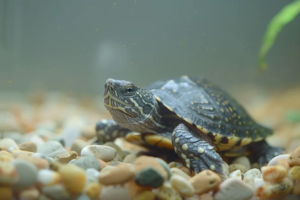
Why Is My Turtle Not Eating? Possible Causes
A turtle that suddenly stops eating is usually reacting to its environment — new surroundings, too little space, low temperature, or lack of light — or to illness like constipation, respiratory infection, or white-eye disease. Keep it watered, warm, and lit; see a vet for other symptoms.

What to Do When a Turtle Won’t Eat for Days
A turtle refusing food for days is usually environmental — new surroundings, low temperature, shallow water, or illness. Keep water 10–15 cm deep, hold 22–25°C, change water often, and tempt with shrimp or raw meat (never salty food); see a vet if it persists.
How should I keep an alligator snapping turtle well?
Alligator snapping turtles are fiercer than usual pet turtles, so keep them in a separate tank to avoid biting others. They are large, needing at least a 1.2 x 1.8 m tank, and prefer shallow water just over the shell. Keep stable water temperature (20 to 28 C, under 2 C short-term change). Feed live fish, shrimp, lean meat, organs; occasionally fruit/veg; adults get some prepared food.
How do you care for a small turtle?
Caring for a small turtle: first choose a proper enclosure—different species need different environments. For a Chinese pond turtle, provide space over 5 times the shell area with a basking platform made of a large rock.
How do I care for a turtle?
Match the setup to species—aquatic, terrestrial, or semi-aquatic. Feed mostly plants (aquatic plants, fruit, veg) plus some fish/shrimp meat; avoid fatty/salty/hard foods. Keep water stable via filter/flow/regular changes; maintain 20–30°C with a heater.