Search Results
230 results for “turtle shell rot”

Malayan Snail-eating Turtle
The Malayan snail-eating turtle (Malayemys subtrijuga) feeds on snails, freshwater mollusks, and crustaceans, which gives it its name. Native to Malaysia and surrounding regions, it is of moderate size but generally unsuited to home keeping.
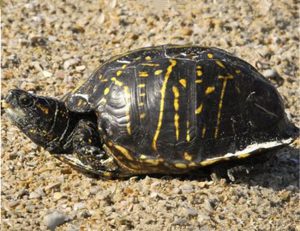
Common Box Turtle
The Carolina box turtle (Terrapene carolina) comprises six subspecies distinguished by their shell patterns and named for its box-like shell. Ranging from eastern North America through Canada and Mexico, this largely terrestrial, omnivorous turtle is exceptionally long-lived, though habitat loss has driven population declines.

Three-striped roofed turtle
The giant roofed turtles (including the Burmese, Red-crowned, and Three-striped roofed turtles) are large, rare Asian river turtles that need spacious outdoor ponds with basking sites. Timid yet personable, they require warm water and careful temperature gradients to stay healthy.

Chiapas giant musk turtle
The Chiapas Giant Musk Turtle (Staurotypus triporcatus) is the largest and most vividly patterned of the musk turtles, native to Central America. A highly aquatic, somewhat aggressive omnivore, it needs a large, sturdy, well-filtered aquatic setup.

Bengal Roof Turtle
The Bengal Roof Turtle (also called the Red-crowned Roof Turtle) is a Critically Endangered Asian river turtle famed for the brilliant red, white, and blue courtship colors of mature males. Rare in captivity and heavily protected, it needs pristine filtered water and warm temperatures, and is mainly herbivorous as an adult.

Black Wood Turtle
The Black Wood Turtle (Rhinoclemmys funerea) is a striking freshwater turtle with a black or dark brown carapace and yellow-edged plastron, native from Honduras south to the Panama Canal. Cold-tolerant and highly adaptable, it can be kept aquatic or terrestrial, though males should be housed separately to avoid fighting.

African Keeled Mud Turtle
The African Keeled Mud Turtle (Pelusios carinatus) is a side-necked turtle from Africa, dark gray to black with a keeled shell and a yellow plastron. A gentle, hardy semi-aquatic species that adapts well to captivity and makes a good, if uncommon, community turtle.
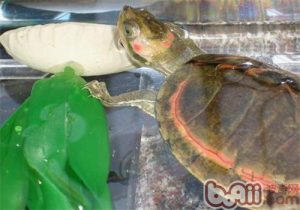
Pink-ringed Tent Turtle
The Pink-ringed Tent Turtle (Pangshura tentoria) is a striking high-domed turtle with pink cheeks and a pink ring around its carapace, but it is delicate, with hatchling mortality often above 80%, mostly from skin rot. Best suited to experienced keepers who can provide stable temperatures and a basking area.
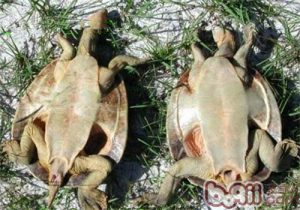
Fitzroy River Turtle
The Fitzroy River Turtle (Rheodytes leukops) is an Australian river turtle famous for 'breathing through its bottom'—it draws oxygen via cloacal sacs, letting it stay submerged far longer than most turtles. A bottom-dweller of flowing, gravelly waters, it is sensitive to poor water quality and warm temperatures.
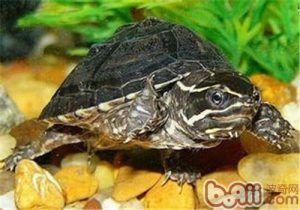
Mud Turtle
The Mud Turtle is not a single species but a group of turtles sharing common traits in body structure or distribution, classified under one family. The family Kinosternidae includes the mud turtles and musk turtles.