Search Results
39 results for “turtle hiding”
Why Is My Turtle’s Shell Rotting?
A rotting shell loses the turtle its main shield, and it usually comes from imbalance: poor diet short on vitamins and minerals, skipped cleaning that lets bacteria and parasites invade, too little light and wrong temperatures, or untreated scrapes that get infected. Feed a complete, balanced diet; rinse the shell weekly and keep the tank water fresh to stop bacteria; give proper sunlight—it disinfects—and steady warmth; and pad the enclosure so the shell isn't injured. If you spot damage, treat it early before infection spreads. Steady, careful care is what keeps a turtle's shell sound.
Why Does a Turtle Keep Scratching the Tank Glass?
A turtle that constantly scratches or claws at the tank glass is usually unsettled by its environment. New arrivals need time to adjust, and a bare tank with strong light, no hiding spots, or loud surroundings makes the turtle feel unsafe and eager to escape. Add plants or driftwood for cover, soften the lighting, keep the tank away from noise and vibration, and give more space when possible so the turtle feels secure.
What Are the Common Deep-Water Turtle Species?
Common deep-water turtles include the snapping turtle, pig-nosed turtle, map turtle, musk turtle, and painted turtle, and most mud turtles also prefer deep water. Each species has different habits, so match the setup to the turtle you choose. The pig-nosed turtle is a strong swimmer that lives in water year-round and needs no basking platform, but it is demanding about water quality. Map turtles need good basking areas and like live prey.
What happens when a turtle gets scared?
When a turtle is frightened it typically pulls its head, limbs, and tail back into its shell and refuses to come out for a long time. Chronic stress can make it skittish and reactive, and in severe cases lead to appetite loss and diarrhea, so newly arrived turtles should be left undisturbed until they settle in.

Eastern Box Turtle (Carolina Box Turtle)
The familiar Carolina box turtle of eastern North America - high-domed, fireworks-patterned, and a classic (if pricey) beginner-terrestrial box turtle. Loves soaking but cannot swim.

Eastern Painted Turtle
One of four painted-turtle subspecies - smaller, plainer and a bit harder to keep than the western form, but a classic, hardy North American pet with a red-edged shell.

Spiny Turtle
The 'sun turtle' - a bizarre, spiky juvenile that sadly loses most of its spikes with age. CITES II and wild-imported specimens often arrive near death; a delicate, specialist turtle.

Pig-nosed Turtle
A bizarre, soft-shelled, flipper-limbed 'fly river turtle' that looks more like a turtle-bream hybrid - fully aquatic, sensitive to water quality, and a committed non-basker.

Yunnan Box Turtle
A Chinese endemic box turtle once thought extinct and now among the rarest, most expensive turtles - effectively not a legal pet trade animal.
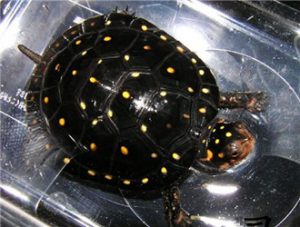
Spotted Turtle
A tiny, starry-spotted North American gem - one of the smallest turtles, beautiful, and of real conservation concern (pricey and declining).