Search Results
137 results for “turtle cold”
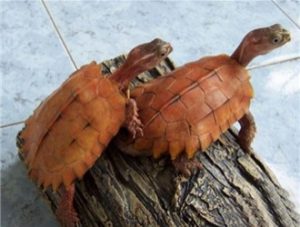
Black-breasted Leaf Turtle
A tiny, leaf-shaped turtle from southern China and Southeast Asia, famous for its golden carapace with twelve keels and notorious for being one of the hardest chelonians to keep.

What’s Needed to Keep a Radiated Tortoise Outdoors
Hatchlings suit indoors; adults do better outside with much more space (at least 240×150 cm each). Best where the year-average temperature is ~18°C and never below 16°C. Build a small heated hut with UVB, tall smooth fencing with a locked mesh lid against predators, a planted sandy garden, and a shallow pool. Separate aggressive males.
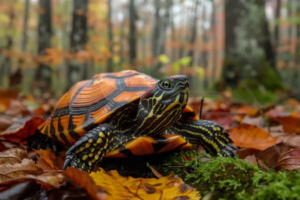
Common Illnesses of Red-Eared Sliders
Red-eared sliders face several common illnesses: white-eye disease (a white film from poor water), gastroenteritis (odd red-green stools), pneumonia (wheezing, head held high), skin rot, calcium deficiency (soft shell), shell rot, and colds. Most trace to water quality and temperature swings, and many respond to antibiotic soaks or ointments plus warmth and sunlight.
What should I do if my red-eared slider won’t eat?
A red-eared slider that won't eat is often due to water that's too shallow (it's aquatic and must eat in water, so keep at least 10-15 cm), water that's too cold (ideal 22-25 C), or poor water quality - change water often and clean the tank. Mood matters too, so give it a floating island to rest on and proper light.
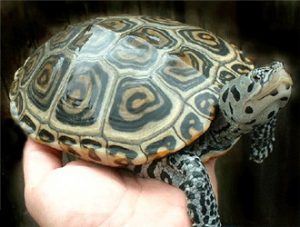
Northern Diamondback Terrapin
The Northern Diamondback Terrapin (Malaclemys terrapin terrapin), the nominate subspecies, is a semi-aquatic turtle native to the brackish estuaries of the U.S. Atlantic coast. Named for the diamond patterns on its shell, it is increasingly popular, reasonably priced, and not hard to keep — but it needs brackish water.
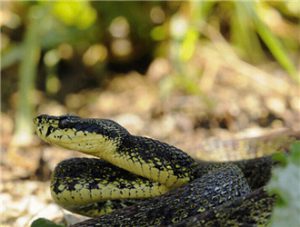
Pointed-scaled Pit Viper
The Pointed-scaled Pit Viper (Protobothrops mucrosquamatus), known in Chinese as Yuan Mao Tou Fu and commonly called the turtle-jawed or Taiwanese pit viper, is a venomous snake of the family Viperidae and one of Taiwan's six medically important venomous snakes. It is dangerous and should only be kept by experienced handlers.

Yellow-bellied Slider
The Yellow-bellied Slider (Trachemys scripta scripta) is a common, hardy and inexpensive North American slider with a yellow belly and yellow 'ear' patches. Easy to keep but a messy, fast-eating carnivore-leaning omnivore.

Yellow-blotched Sawback
The Yellow-blotched Sawback (Graptemys flavimaculata) is the most vividly marked map turtle, endemic to Mississippi's Pascagoula River. Strictly protected in the United States and rarely seen in trade, it has no successful captive breeding.
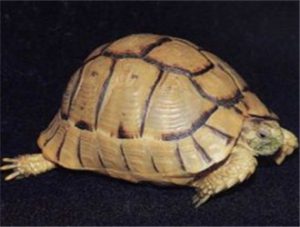
Egyptian Tortoise
The Egyptian Tortoise (Testudo kleinmanni) is the smallest tortoise in the Northern Hemisphere and the most fragile, hardest-to-keep Mediterranean tortoise. Tiny changes in environment or diet can cause stress death; do not mix it with other turtles.
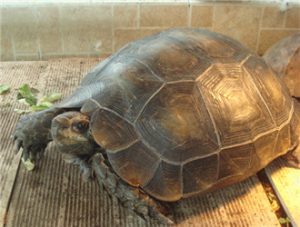
Burmese Mountain Tortoise
The Burmese Mountain Tortoise (Manouria emys) is one of Asia's largest tortoises, a shy forest dweller from western India to Vietnam and Sumatra. It loves warmth and humidity, shuns bright light, and is a committed herbivore that rarely accepts animal food.