Black-breasted Leaf Turtle
2 Photo Gallery

1 Overview
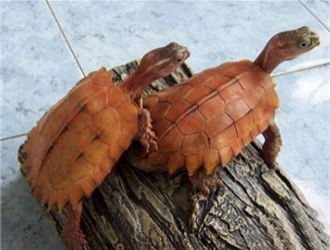
The black-breasted leaf turtle (Geoemyda spengleri) is a small, secretive Asian turtle whose flat, golden-brown shell mimics a fallen leaf – hence the Chinese name ‘maple-leaf turtle’. Adults reach only about 120 mm carapace length.
In the wild it is a protected species in China, and wild collection is illegal. Only captive-bred specimens should ever be kept, and even then it is a species best left to experienced keepers.
2 Appearance
The carapace is golden or orange-yellow with three prominent central keels and strongly serrated front and rear margins, giving the ‘twelve-keel’ look. The plastron is dark brown to black with pale markings.
The head is small with a hooked upper jaw, large protruding eyes, and a pale stripe running from the snout back through the eye to the neck. The limbs are brown with red or black speckling.
3 Care & Temperament
Leaf turtles are shy and easily stressed, which is why they are so prone to stopping food. They are not a beginner species. A newly acquired turtle should be settled in a dim, quiet container with damp soil and a shallow water dish before any handling.
Once accommodated they become surprisingly interactive, but sudden disturbances will trigger refusal to feed. Stable temperature and minimal interference are the keys to success.
4 Habitat & Environment
This is a semi-aquatic species that needs a humid, shaded retreat. In captivity a 3-5 cm layer of moist sand or soil works well, refreshed monthly, with a basking area kept dry in winter.
Keep a diary of temperature and feeding; leaf turtles are sensitive to cold and will refuse food or fall ill when temperatures drop. Provide a small water dish for soaking and drinking.
5 Diet & Feeding
They prefer live, moving prey: earthworms, crickets, mealworms, and the like. Occasional fruit such as papaya, banana or orange can be offered, but vegetables are usually refused.
Feed mostly at dusk when the turtle is most active. Dust food with calcium and vitamin supplements every two weeks. Young turtles often drag food into water, so change the water daily.