Search Results
11 results for “turtle care tips”

How to Feed and Choose Turtle Pellets
A proper diet is the key to a healthy, long-lived turtle. Choose high-quality pellets made from fresh fish and shrimp and matched to your turtle's species and feeding habits, then control the amount and frequency of feeding. Beyond pellets, offer fresh fruit, vegetables, and greens for extra nutrition—but never chocolate, onions, or other harmful foods. Soaking pellets for 10 minutes before feeding small turtles under 10 cm aids digestion, and rotating brands keeps the diet varied so your turtle doesn't turn picky. A little attention to feeding goes a long way.
Tips for Keeping Turtles and Fish Together
Not every turtle belongs with fish. Good tank mates need to live in deep water, prefer plants, and have a gentle temperament so they will not attack fish, which is why the pig-nosed turtle, yellow-spotted side-neck, and razor-backed musk turtle are common choices. Use a dedicated tank with a basking area, feed turtles and fish separately on their own schedules, and pick mild species on both sides to avoid injury to either.

Western Pond Turtle
The western pond turtle, also called the California pond turtle, is a broad-headed, relatively secretive freshwater turtle native to the U.S. West Coast. An accomplished swimmer that loves basking, it is a protected species usually available only as captive-bred stock.
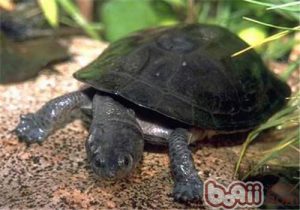
Mesoclemmys Turtle
The Mesoclemmys turtle is a little-known, wide-ranging South American species that has been largely overlooked by both researchers and hobbyists. A small, secretive turtle inhabiting shaded forest streams, it remains rare in the pet trade.

Texas Map Turtle
The Texas Map Turtle lives in the Colorado River basin of the Edwards Plateau in Texas and is a relatively common map turtle, though priced higher; it resembles the Mississippi Map Turtle and is sometimes hard to tell apart. It is the smallest-shelled of all map turtles, with no prominent keel.

Northern Australian Snapping Turtle
The Northern Australian Snapping Turtle (Elseya dentata) is active from April to October, foraging along the bottoms of waterways in warm months. If its habitat dries up, it migrates over land to permanent water or burrows into mud to estivate; remarkably terrestrial, many are killed crossing roads.

Zhou’s Box Turtle
Zhou's Box Turtle (Cuora zhoui) is a rare and precious turtle in China, found only in Guangxi and Yunnan provinces. Wild populations are nearly depleted, and most knowledge about the species comes from captive husbandry experience.

Hilaire’s Toadhead Turtle
Hilaire's Toadhead Turtle (Phrynops hilarii) is a side-necked turtle in the toadhead genus, strongly affected by ambient temperature and closely tied to it in behavior. Delicate and hard to keep in captivity, it is not recommended as a first turtle.
How to Estimate a Red-Eared Slider’s Age
If you did not raise a red-eared slider from a hatchling, you cannot know its exact age, but for young sliders you can estimate it from a few clues. Each round marking on the belly scutes suggests one year, and the number of concentric rings on the shell plus one gives another estimate. Weight and shell length also track age, and clearer, darker shell rings hint at an older turtle. Sliders usually mature at three to four years at over 17 centimeters, after which aging becomes hard to gauge.
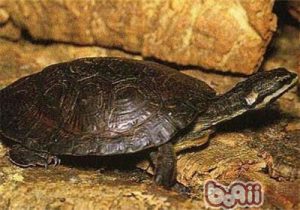
Phrynops williamsi
Phrynops williamsi, also called the Masked Toadhead Turtle, is a side-necked turtle from South America that loves basking and is semi-aquatic in the wild. Lively and relatively easy to keep, it remains uncommon in captivity and is found mainly as wild-caught individuals.