Search Results
44 results for “supplement choice”

Western Hermann’s Tortoise
The Western Hermann's Tortoise (Testudo hermanni) is a common, beginner-friendly tortoise with undemanding environmental needs and good disease resistance, though it carries a relatively high price. Native to Spain and southern France, it is a Mediterranean-species herbivore that also occasionally takes animal prey.

Suppurative Arthritis in Dogs and Cats: Symptoms, Treatment, and Prevention
Suppurative arthritis is infection of a joint by pyogenic bacteria, either carried in the blood or introduced through a penetrating wound, causing hot, painful swelling, fever, and lameness. Prompt drainage and antibiotic therapy are essential to save the joint and prevent spread; untreated it can rupture through the skin.

Anemia in Dogs and Cats: Symptoms, Treatment, and Prevention
Anemia is not a disease itself but a sign of many conditions in which red cells or hemoglobin fall short, depriving tissues of oxygen. Pets become weak, pale, and breathless, and treatment corrects the underlying cause while rebuilding red cells through diet, supplements, or transfusion.

Dilated Cardiomyopathy in Dogs and Cats: Symptoms, Treatment, and Prevention
Dilated cardiomyopathy (DCM) is a heart-muscle disorder in which the ventricular chambers enlarge and weaken, leading to poor pumping, congestive heart failure, and arrhythmias. Large and middle-sized breeds are most at risk, and signs include weakness, coughing, abdominal swelling, and fainting.

How to Prevent and Treat Dog Anxiety
Summer is hard on dogs and owners, not just from heat but from fireworks and travel; yet dog anxiety persists year-round under noisy, high-stress conditions.

Chronic Kidney Disease in Cats: Symptoms and Treatment
Chronic kidney disease is common in cats and a leading cause of death, mainly because cats drink little, staying dehydrated and stressing the kidneys until function is slowly lost.

The Truth About Cat Vaccinations
A cat's resistance changes with age: weak in infancy before the body peaks, and declining again in old age.
What to Do for Feline Liver Failure
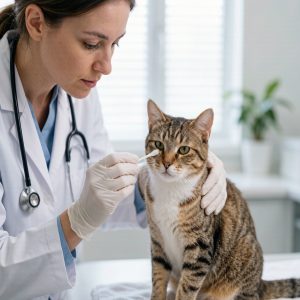
The veterinarian will perform various tests to diagnose liver failure and rule out other diseases that may cause similar symptoms. Obtaining a complete history, describing clinical signs, and a thorough physical examination are all important methods for reaching a diagnosis. In addition, a liver biopsy is necessary in some cases to obtain a definitive diagnosis. Your veterinarian may recommend the following tests to rule out other diseases and confirm the diagnosis of liver failure.

Can Cats Eat Grass? Benefits, Risks, and Growing Cat Grass
Many cats nibble grass, and it isn't necessarily a problem — grass can supply folic acid and fiber and help with hairballs. The real risks come from lawn chemicals and toxic houseplants. Here is the safe way to offer it.

What to Do When Your Dog Is a Picky Eater
Picky eating often starts with table scraps and home-cooked meals. Fix it by separating human food from kibble, scheduled feeding with a 10-15 minute window, more exercise, and puzzle feeders, and get the whole household to stick to the plan.