Search Results
402 results for “shade”

Keeping Your Dog Free of Skin Problems in Summer
Summer's heat and humidity breed bacteria and parasites, so skin trouble spikes. Bathe and dry the coat with a pet shampoo, avoid strong midday sun to prevent burns, and keep the living space clean and dry. Use a monthly topical preventive with selamectin or fipronil to block fleas, lice, mites and ticks, and feed vitamins and protein to lift immunity. See a vet for itching, hair loss or rashes.
Which Golden Retriever color is most expensive?
The golden shade is priciest and most popular; purer, brighter color costs more. But bloodline also matters - and pick by preference, not just color.

How to Prevent Heatstroke in Hamsters During Summer
All hamsters hate heat, so in summer, without proper cooling, they can quickly suffer heatstroke. Early signs are frantic running, excitement, and jumping; as it worsens, tremors, dehydration, and coma follow, and death can come fast without prompt first aid. Move the cage to a cool, airy spot, give plenty of water, and act at the first sign by cooling the environment and offering electrolyte fluid. Prevention means ventilation, constant fresh water, cooling tiles, and light, hydrating foods like cucumber and watermelon.

What to Do When Your Cat Loses Appetite in Summer
Hot weather can drop a cat's appetite, and so can warm or dry food, illness, parasites, moving, or household stress. Keep the environment cool and shaded, offer light wet food rather than hot meals, and place several water bowls around the home so a dehydrated cat can drink anytime. Gentle play and a clean living space help, as does adding a pet probiotic to the food. Favorite toppers like canned food, freeze-dried meat, or chicken can renew interest. If appetite stays poor, have a vet rule out disease or worms.

American Flagfish
The American flagfish is an upper-water fish with an aggressive temperament; when it strikes prey its speed and impact are formidable. Its unusual body shape makes it a notably fast swimmer.
Lloyd’s Lyretail
The Lloyd's Lyretail reaches 4–5 cm and is native to East Africa. Called one of the world's most beautiful tropical fish, it is also very hard to keep, among the hardest. Sensitive to hard water, its environment must be carefully managed.

Firemouth Cichlid
The Firemouth Cichlid's greatest feature is that sexing is very difficult, yet it is a distinctive variety. Native to Mexico in North America, it is large, reaching 10–15 cm as an adult.

Kohaku
The Kohaku is the representative variety of koi, beloved by many hobbyists, and is increasingly kept as a feng shui fish. It was first discovered between 1804 and 1829, and was gradually developed into its present form through selective breeding.
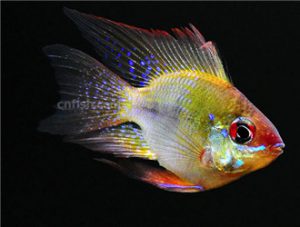
Ram cichlid
The Ram Cichlid originated from the Venezuelan Rainbow Cichlid and was developed into the Ram Cichlid after refinement in the Netherlands and Germany. It belongs to the same genus as the Bolivian Ram, but the Ram Cichlid is more brightly colored and is very popular among aquarists.

Mottled Dwarf Cichlid
The Mottled Dwarf Cichlid (Apistogramma guttata), also called the Giefere Dwarf Cichlid, is a slender South American dwarf cichlid from the Orinoco basin. It needs soft, acidic water and is prone to gill diseases, so tank cleanliness is essential.