Search Results
483 results for “rabbit food”

Himalayan、Colourpoint Persians
The Persian is a widely known and popular breed; from its early crossbreeding emerged the Himalayan cat. The Persian's early evolution likely occurred on the cold Persian Plateau (today's Iran and Iraq). When Phoenicians and Romans brought these silky-longhaired cats to Europe, Europeans fell for them. Over the years, the Persian's long coat was deliberately retained and emphasized in breeding.

Nebelung
The Nebelung is essentially a long-haired Russian Blue, a rare variant recognized by TICA in 1987 and hailed as the 'nobility of long-haired breeds.' Apart from its coat, it is identical to the Russian Blue. Quiet, shy, and gentle, yet intelligent and adaptable, it is well suited to calm households.

Japanese Bobtail
The Japanese Bobtail, also known as the Lucky Cat (Maneki-neko), is very popular in Japan. Cat lovers, upon hearing 'lucky,' want one. It is a native Japanese breed with a history tracing back centuries. Bred in the US after introduction, it is said an American cat lover in Japan found a cat with a short rabbit-like tail and brought several back after WWII; these are the ancestors. The Japanese Bobtail sits with one front paw raised, said to represent good fortune.

Singapura、Kucinta
The Singapura originates from Singapore and is also known as the Lion City Cat. With the English names Singapura and Kucinta, it is the smallest cat breed in the world, attracting much attention from cat lovers. Its less pleasant nicknames, drain cat and sewer cat, come from its living environment: early on, the Singapura was unwelcome among locals and forced to live in drains or sewers, hence the names.

Abyssinian
The Abyssinian, also called the rabbit cat, Ethiopian cat, or Abyssinian, has the English name Abyssinian and is now distributed around the world. People usually judge a cat's origin by its name, but the Abyssinian's origin seems somewhat distant from Abyssinia. Abyssinia is the old name for Ethiopia, yet many believe the Abyssinian comes from ancient Egypt.
What should a farmed fox be fed?
Foxes are carnivorous, eating mice, rabbits, birds, fish, frogs, lizards, and insects, plus some wild fruit. Feed mainly prepared food with meat and vegetables; young foxes 3 times daily, adults twice, once when very cold.
Dark green soft stool stuck to the rear with a strong smell; ate a little peach yesterday instead of hay, lethargic since noon, watery diarrhea and loud teeth grinding by 6pm
Green watery diarrhea in a rabbit is often caused by diet or digestive problems. Reduce fresh produce and restore hay and pellets as the main diet.
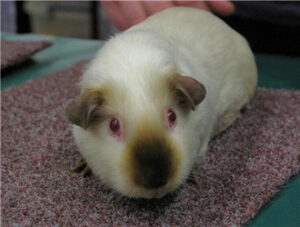
Himalayan Guinea Pig
The Himalayan Guinea Pig is a panda-marked variety of guinea pig—white body with dark nose, ears, and feet—known for its gentle, clingy, yet timid nature. An easy, inexpensive pet that loves to eat and breed, it thrives on hay, vegetables, and a little concentrate.

Dwarf Hotot
The Dwarf Hotot, also called the Dwarf Panda Rabbit, is a small, lively pet rabbit with an all-white coat and distinctive black eye markings. Easy to keep like other pet rabbits, it needs a secure cage, daily grooming, and unlimited hay.
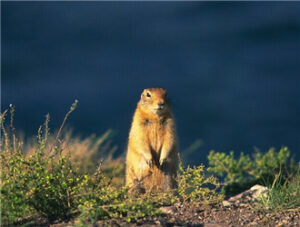
Marmot
The marmot is an expert burrower and hibernator with a coat the color of soil and a clever, endearing look. A vegetarian rodent kept as a pet, it needs a sturdy cage, fresh food and water daily, and vitamin C to avoid scurvy.