Search Results
1918 results for “pica”

Kapuas Mud Snake
The Kapuas Mud Snake (also called the color-changing snake) is found in swamps and swamp forests along Indonesia's Kapuas River. A rear-fanged colubrid discovered only around 2005, it is venomous but not yet kept as a pet.

Dyscophus antongili
The Antongil Bay Tomato Frog (Dyscophus antongili) is native to the east coast of Madagascar and feeds on insects. Restricted to a narrow range and threatened by habitat loss and poaching for the pet trade, it is listed under CITES Appendix I. Wild individuals come in red (females) or yellow (males), so choose a female if you want a red 'tomato'.

Physignathus lesueuri
The Australian Water Dragon (Physignathus lesueuri) is a docile, medium-sized lizard that enjoys swimming, making it an ideal choice for keepers who want a gentle, aquatic reptile. Closely resembling the Green Iguana but lacking the large rounded scales on the cheeks, it thrives with proper care and can live 10-20 years or more.

Xenesthis monstrosa
The Colombian Giant Black (Xenesthis monstrosa) is a dark-colored tarantula little known in the pet trade and described as very similar to the Colombian Laser. With a black carapace marked only by pink spots around the eyes and a large 22-24 cm legspan, it is a challenging, expert-level species.

Xenesthis immanis
The Colombian Laser (Xenesthis immanis) is a striking pet tarantula prized for its violet, laser-patterned carapace, with adult males showing the most vivid coloration. Native to southern Colombia and Peru, it is a slow-growing, long-lived species suited to experienced keepers.

Costa Rican Orange Mouth Tarantula
The Costa Rican orange mouth (Psalmopoeus reduncus) is a small, fast, metallic-colored arboreal tarantula from Central American rainforests. Fierce and escape-prone, it is best kept by experienced handlers in a humid, arboreal setup.

Gumprecht’s Green Pit Viper
Gumprecht's green pit viper (Viridovipera gumprechti), described in 2002, is a large, vividly green arboreal pit viper of Thailand, Myanmar, Vietnam and Yunnan reaching 130 cm. Sexually dimorphic and venomous, it feeds on small mammals, birds and lizards.

Tomato Frog
The tomato frog (Dyscophus guineti) is a brilliantly red, frog-shaped amphibian from Madagascar's eastern coast. Despite its looks, its skin secretes a painful defensive toxin, and it thrives in a humid, mostly terrestrial setup fed on crickets and other insects.
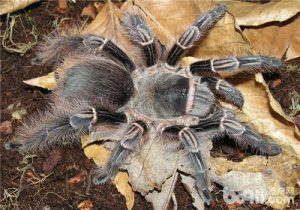
Pink Zebra Beauty
The pink zebra beauty is a large, docile terrestrial tarantula from the South American Pampas, named for its pink hairs and golden leg bands. Reaching a 14–16 cm leg span, it is gentle but fast, and does well in a burrow-style setup with moist substrate.

French Guiana Blue Fang
The French Guiana blue fang (Ephebopus cyanognathus) is a strikingly beautiful, metallic-hued tarantula from the rainforests of French Guiana, valued by collectors for its blue chelicerae. A burrowing species needing warm, humid conditions, it is best left unhandled due to its potent venom.