Search Results
67 results for “nesting box”

Java Sparrow
Wild Java Sparrows have plain plumage, but selective breeding has produced many color variants. Now found worldwide, the Java Sparrow has been bred into various new colors and has become a world-famous cage bird.

Golden Conure / Queen of Bavaria’s Conure
The Golden Conure has very special plumage: except for green wings, its entire body is golden yellow, dazzling and beautiful. It is one of the rarest, most beautiful, and largest of the conures.

Black-capped Lory
The Black-capped Lory is a very beautiful bird whose plumage is varied and vivid, which is why it is loved by many. Its most obvious and well-known feature is its black crown, as if wearing a black cap. Unlike some other parrots that eat plant seeds, the Black-capped Lory feeds mainly on nectar, pollen, and fruit.
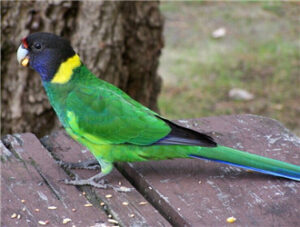
Port Lincoln Parrot
The Port Lincoln Parrot has three subspecies in total. Owing to its wide distribution, its habitat is equally varied; it is mainly active in open eucalyptus woodland, shrubland, farmland and orchards, coastal areas, desert regions, suburbs, and parks. Populations in northern Australia undertake seasonal migrations.

Red-shouldered Macaw
Macaws are never small in size, and even as the smallest macaw, the Red-shouldered Macaw exceeds 30 cm in body length. Because it can talk, the Red-shouldered Macaw has found its way into many homes. With proper care it lives about 20 years, though records show the oldest individuals can reach 80 years of age.
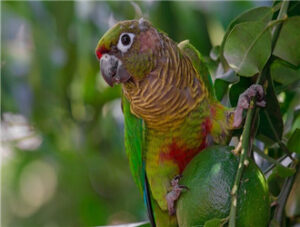
Green-cheeked Conure
The Green-cheeked Conure (Pyrrhura molinae), also called the green-cheeked parakeet, is a typical climbing bird with richly colored plumage. It is mainly distributed in the highlands of eastern Bolivia.

How to Care for a Cockatiel
Cockatiels are sturdy climbers that love to chew wood, so use a roomy metal cage (about 45×60×40 cm per pair) with a 2 cm perch. Clean the water cup daily, disinfect cups weekly, and keep the room at 16–30°C. Feed a mixed seed diet—millet 40%, hemp 20%, panicum 20%, sunflower 10%, rice 10%—plus egg-food and greens. They breed from about eight months; skip summer breeding for better hatch rates, and keep things quiet during nesting.
How can you tell an old dog is about to give birth?
Before birth, dogs show restlessness, nesting, rapid breathing, milk leakage, and appetite loss. Rectal temperature drops 1°C a day before, then returns; vulva discharges mucus. Prepare a quiet whelping box.
How do you assist a dog during delivery?
Prepare supplies and watch for labor signs; after water breaks, birth starts in about 30 minutes. Help a first-timer by clearing the sac, cutting the cord, and drying the pup.
What is the latest a pregnant dog can give birth?
A dog's gestation period is about 65 days, possibly earlier or later, but pregnancy rarely exceeds 70 days. Before labor the mother shows signs like nesting and restlessness. If amniotic fluid breaks, birth usually occurs within 2 hours.