Search Results
70 results for “mice”

Kinosternon dunni
Kinosternon dunni, the Colombian Mud Turtle, is a semi-aquatic musk-turtle relative from Colombia's streams, mostly herbivorous and similar in looks to the narrow-bridged mud turtle. A prolific breeder, it benefits from a short, safe hibernation and a varied, plant-rich diet.

African Keeled Mud Turtle
The African Keeled Mud Turtle (Pelusios carinatus) is a side-necked turtle from Africa, dark gray to black with a keeled shell and a yellow plastron. A gentle, hardy semi-aquatic species that adapts well to captivity and makes a good, if uncommon, community turtle.

Pamphobeteus antinous
Pamphobeteus antinous, the Bolivian Blue, is one of the largest tarantulas in its genus, reaching a legspan of 20–22+ cm, with males showing iridescent blue-violet chelicerae and females a velvety black. A defensive, urticating-hair-heavy species, it is recommended only for experienced keepers.
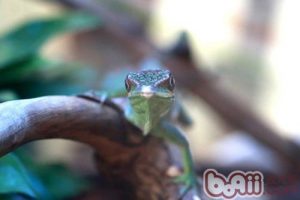
Green Anole
The Green Anole (Anolis carolinensis) is a small, tree-dwelling lizard from the southeastern United States and Caribbean, famous for changing color between green and brown, earning it the nickname 'American chameleon.' A diurnal, insect-eating pet that is easy to keep in a planted terrarium with heat and UVB.

Peruvian Golden Copper Tarantula
The Peruvian Golden Copper Tarantula (Lasiodorides polycuspulatus) is a medium-sized, calm tarantula from central Peru whose silver-gray spiderlings develop golden-copper markings as they mature. Though wild collection has dwindled, it remains a favored, beginner-friendly species.
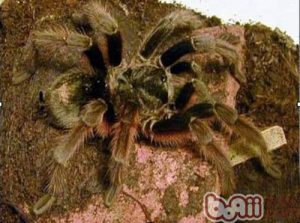
Brazilian Coffee Tarantula
The Brazilian Coffee Tarantula (Acanthoscurria suina), also known as the Argentine Coffee, is a ground-dwelling species from Argentina and Uruguay that favors subtropical grassland. With a mild temperament, slow speed, and modest size, it is often recommended as a good starter tarantula for beginners.
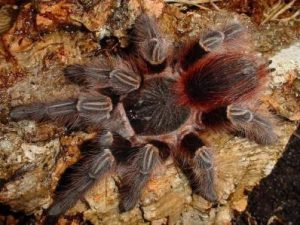
Bolivian Red Rump Tarantula
The Bolivian Red Rump (Acanthoscurria chacoana), also called the Bolivian Salmon Pink, is a pet tarantula native to Bolivia and Argentina prized for its impressive size and coloration. Adults can exceed a 20 cm leg span and may show some defensiveness, but they remain a popular choice for keepers.

Psalmopoeus pulcher
The Panama Golden (Psalmopoeus pulcher), also called the Panama Blonde, is a striking arboreal tarantula from Panama's rainforests, reaching 15-16 cm. Golden adults with pink-legged slings are beautiful but fast, somewhat aggressive, and best for experienced keepers.

Pamphobeteus platyomma
The Brazilian Pink Bird-eating Spider (Pamphobeteus platyomma) is a striking, rare theraphoside from Central America's rainforests, reaching 18-22 cm. Its slings are blue with red abdomens, and adults are vividly colored; best left to experienced keepers due to its aggressiveness and difficult breeding.

Vipera ruselli siamensis
The white-browed pit viper (Vipera ruselli siamensis) is a venomous pit viper found in Fujian, Guangdong, and Guangxi in China, and abroad in India, Pakistan, Myanmar, and Thailand. Despite its potent venom, used medically to treat cerebral thrombosis, it is one of the easiest snakes to keep and tolerates a wide range of temperatures.