Search Results
153 results for “lack of pigment”
How do you keep arowana fish?
Keep arowana alone in a large tank with dark background, stable warm water, good filtration, and meaty foods.
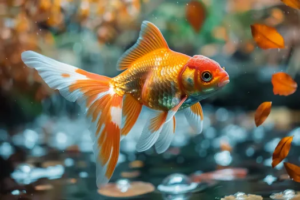
How to Enhance Your Arowana’s Color?
Arowanas are prized for their bold shape and vivid color, but sometimes the fish fade or never reach full brilliance. Color comes from pigments in the scales, so the fix is mostly environmental and dietary. Keep water clean and stable—regular changes, correct temperature, pH, and hardness—and avoid sudden swings that stress a red arowana and stall its coloring. Feed pigment-rich foods like small fish, shrimp, bloodworms, and earthworms, especially during the key coloring stage. Use moderate LED lighting and the right tank background (black suits red arowanas, in a dimmer setup), and balance swimming exercise with proper rest to support pigment production.
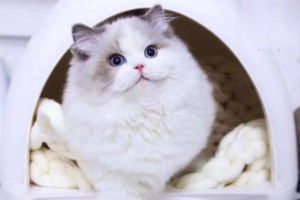
Why Do Cats Have Different Eye Colors?
Cat eyes come in an astonishing range of colors - copper, amber, green, blue, orange and brown - and certain breeds are famous for theirs: Ragdolls and Siamese for brilliant blue, while the common domestic shorthair most often shows yellow. But a kitten's eye color is not set at birth. Newborn kittens usually have blue eyes because melanin has not yet activated, and the true color only emerges as they grow. In this article we explain what determines a cat's eye color, at what age it settles, why some cats show a mesmerizing deep blue, and the fascinating genetics behind odd-eyed cats with two different colored eyes.

Does Heterochromia Affect a Cat’s Vision?
Heterochromia, or odd-eyed cats, does not affect vision, and these cats are usually striking. But most have a hearing defect: the ear on the blue-eyed side often has impaired hearing, a beautiful flaw. Because cats rely on hearing to move around, this can affect their actions. Owners should understand if an odd-eyed cat ignores them because it cannot hear, and should fit guards and supervise them. Their eyesight is normal; only their hearing differs, and it does not harm general health. Adopt with commitment, and never abandon them for it.

Symptoms and Treatment of Obesity in Cats and Dogs
Obesity is a nutrition disorder; by international standard, 10 to 15 percent over ideal weight counts as obese, and a body condition score gives a clearer read. In developed countries 10 to 40 percent of dogs and over 20 percent of cats are obese. Causes split into simple obesity from genes, overfeeding, and little exercise, and secondary obesity from hormone or endocrine disease. Diagnosis uses exams, body scoring, and lab work, and treatment is diet, more exercise, and managing any underlying disease.

Labrador Retriever Breed Standard
The Labrador is a strongly built, medium, short-coupled gundog with great endurance and a kind, friendly, intelligent temperament—equally a stable hunter and a family companion. Hallmarks: a short dense weather-resistant coat, an 'otter' tail, a clean head with a broad skull and moderate stop, and a powerful jaw. Males stand 22.5–24.5 in and weigh 65–80 lb; females 21.5–23.5 in, 55–70 lb (not for under-12-month dogs). The nose should be wide and well-pigmented (pink/none is a disqualification); eyes kindly brown; a balanced body with muscle, not fat, defines the working type.

Why a Dog’s Nose Loses Color in Winter
'Snow nose' is a normal winter fading of nose pigment, not a disease—common in Huskies, Malamutes, Goldens, and Labs. Cold lowers tyrosinase activity, so less melanin is made and the nose lightens; it returns on its own in summer. To keep the black nose, add fish oil or kelp, swap plastic bowls for stainless (plastic can irritate sensitive noses), and get sunlight (UV boosts the enzyme). But easy-snow-nose dogs have little melanin to begin with and burn easily, so avoid summer overexposure and use nose sunscreen.
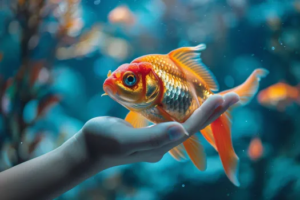
Why Koi Lose Their Color and How to Restore It
Koi sometimes fade after purchase because some sellers feed color-enhancing diets that wash out once the fish eats normal food at home. Color also shifts with water quality, temperature, stress and poor nutrition. Buy from a trusted aquarium shop, feed on a fixed quality, amount, time and place, and keep water clean with low nitrates and stable pH. For red fish aim pH 7.0 to 7.2 with natural carotene foods; for black markings keep pH below 7.2, cooler water and harder, well-lit conditions.

Why Does a Golden Retriever’s Nose Lose Color?
A Golden Retriever's nose can fade for many reasons: too little sunlight, cold weather, aging, genetics, poor nutrition, allergy, or a past injury. Cold-season and genetic fading are normal and need no action, and senior dogs simply show natural aging. But if fading comes from lack of vitamins and minerals or from allergy, step in to prevent bigger problems. Provide sun time, a balanced high-quality diet, and see a vet if allergy is suspected.

Magpie Goldfish
The Magpie Goldfish, short for 'Magpie', has a blue-based body color and is named for its overall resemblance to a magpie. It mostly derives from blue goldfish such as the Blue Oranda or Blue Dragon Eye.