Search Results
876 results for “indoor”

A Complete Guide to Deworming Your Cat
Even indoor cats need regular deworming, because we carry parasite eggs home on our shoes. Kittens and adults alike are exposed through grooming and play. This guide covers internal and external parasites, common product types, a schedule, and the safety notes every owner should know.

What to Do When a Rabbit Gets Hyper at Night
A rabbit that turns energetic at night can have many reasons: too little daytime activity, changes in the evening environment, or physical discomfort. To burn off energy, give it enough stimulation during the day. Also check diet and health regularly to rule out digestion trouble or pain, and offer a cozy hiding spot like a box to help it relax and sleep. If night excitement persists, too much noise or light may be the cause, so place the cage in a quieter area with fewer stimuli.

That Cat ‘Beer Belly’ Is Actually Normal
Before you worry your cat is overweight, know that the saggy belly flap is usually a primordial pouch, not fat. Nearly all cats, wild and domestic, carry this loose skin, a leftover from ancestors who stored food and needed extra room and protection. Understanding it saves you from needless dieting and explains why some abdominal surgeries change a cat's flexibility.

Feeding Your Cat the Scientific Way
Commercial cat foods are formulated to strict nutrition and safety standards, so a quality kibble matched to your cat's life stage is the simplest healthy staple. Human foods like rice, salt, and plain boiled chicken are poor or even harmful substitutes. This guide covers choosing food, using wet food wisely, and the free-feeding approach that suits a cat's graze-and-nibble nature.

Why Your Cat Keeps Sneezing
An occasional sneeze is nothing, but frequent sneezing with discharge, eye issues, or coughing can hide something serious. Causes span environment, infection, and even facial structure, from dust and viruses to flat-faced-breed anatomy. This guide explains the reasons, when to see a vet, and how to care for and prevent sneezing fits.

Symptoms and Treatment of Parasites in Dogs
Parasites are a leading threat to dog health and come in internal and external forms with different signs. Internal parasites cause diarrhea, vomiting, cough, bigger appetite, weight loss, dry coat, red skin spots, pale gums, and lethargy. Some parasites already live in the home, so even indoor dogs are at risk. Fleas, lice, roundworms, and tapeworms each have their own life cycle and route into the dog. External parasites are zoonotic and cause allergic dermatitis and anemia; internal ones cause poor digestion and can block the gut. Prevention and treatment rely on regular, broad-spectrum parasite control for both inside and out.

How Cats Eat and Drink: Healthy Habits
In the wild a cat eats up to twenty small meals a day, so free access to food suits its nature better than one or two big bowls. Feeding a single staple with the occasional treat, using puzzle feeders for mental stimulation, and placing water bowls away from food all mirror feline instinct. This guide covers sensible feeding and safe drinking setups for indoor cats.
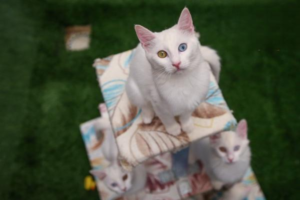
Are Blue-Eyed White Cats Always Deaf?
Many people assume every blue-eyed white cat is deaf, but the truth is more nuanced. The white coat gene is linked to inner-ear degeneration, raising the odds sharply, yet not every such cat loses hearing. Understanding the genetics, how to test at home, and how to communicate with a deaf cat helps these special pets live safe, happy indoor lives.

Feeding an Overweight or Obese Cat
Most adult cats should weigh around nine jin, yet free-feeding makes nearly all of them gain weight. Obesity fuels joint disease and diabetes, so the answer is scheduled, measured meals that cap daily calories at roughly 200 to 225 kcal. If obesity is already causing serious illness, work with a vet on a safe weight-loss plan and monitor progress with regular checkups.

Diagnosing and Treating Feline Idiopathic Cystitis (FIC)
Feline idiopathic cystitis, or FIC, is a common lower-urinary-tract disease in cats whose exact cause is still unknown, yet it is the single most frequent diagnosis in young cats, affecting roughly 50 to 60 percent of cases. It is linked to a defective bladder lining, nerve-driven inflammation, and stress. Because there is no single definitive test, veterinarians diagnose it by exclusion, using the history, urinalysis, blood chemistry, and ultrasound. Most episodes ease on their own within five to seven days, but treatment focuses on pain relief, protecting the bladder lining, litter-box management, more water, prescription food, and reducing stress.