Search Results
343 results for “hind limb”
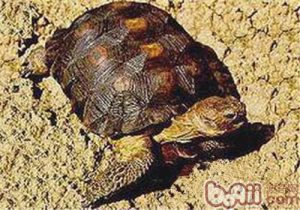
Bolson Tortoise
The Bolson Tortoise (Gopherus flavomarginatus) is the largest of North America's four remaining tortoises, native to the Mapimi Basin of the Chihuahuan Desert in Mexico. Exceptionally long-lived but with very low wild survival, it is rarely traded and depends on burrow-dwelling for safety.

Chiapas giant musk turtle
The Chiapas Giant Musk Turtle (Staurotypus triporcatus) is the largest and most vividly patterned of the musk turtles, native to Central America. A highly aquatic, somewhat aggressive omnivore, it needs a large, sturdy, well-filtered aquatic setup.

Takydromus formosanus
The Taiwan Grass Lizard (Takydromus formosanus) is an endemic, leaf-colored lizard found only on the island of Taiwan. An agile climber that requires strong UVB lighting and a tall, planted terrarium, it is a rewarding but temperature-sensitive pet.
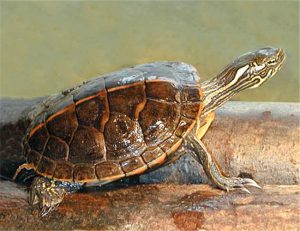
Southern Painted Turtle
The Southern Painted Turtle (Chrysemys picta dorsalis) is the smallest, most strikingly marked subspecies of painted turtle, known for the bold red, orange, or yellow stripe along its carapace midline. Easy to keep and fond of basking, it is omnivorous with a diet shifting from meat as a juvenile to mostly plants as an adult.

Geoffroy’s Side-necked Turtle
The Geoffroy's Side-necked Turtle (Phrynops geoffroanus) is a shy, nocturnal South American side-necked turtle that dislikes basking and prefers dark, vegetated waters. Small and aquatic, it needs a large, clean setup and a varied omnivorous diet.

Chinese Pit Viper
The Chinese Pit Viper (Gloydius shedaoensis), also called the Shedao pit viper, is a venomous, Chinese-endemic snake found on Liaoning's Snake Island and nearby Northeast China. A stout, silver-gray viper with a black brow stripe, it feeds mainly on birds and is listed on the IUCN Red List with roughly 10,000 individuals remaining.
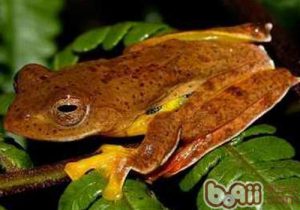
Rhacophorus bipunctatus
Rhacophorus bipunctatus, a flying-tree-frog relative from India, Myanmar, and Malaysia, has toe pads for climbing and can change color like a chameleon. An arboreal frog that needs a planted, humid terrarium and live, moving prey.
Kinosternon dunni
Kinosternon dunni, the Colombian Mud Turtle, is a semi-aquatic musk-turtle relative from Colombia's streams, mostly herbivorous and similar in looks to the narrow-bridged mud turtle. A prolific breeder, it benefits from a short, safe hibernation and a varied, plant-rich diet.

Florida Red-bellied Cooter
The Florida Red-bellied Cooter (Pseudemys nelsoni) is a brightly marked freshwater turtle from Florida and Georgia, popular with keepers who want a colorful alternative to the Red-eared Slider. Hardy and easy to care for, it thrives under slider-like conditions with good water quality and a basking spot.

Dyscophus antongili
The Antongil Bay Tomato Frog (Dyscophus antongili) is native to the east coast of Madagascar and feeds on insects. Restricted to a narrow range and threatened by habitat loss and poaching for the pet trade, it is listed under CITES Appendix I. Wild individuals come in red (females) or yellow (males), so choose a female if you want a red 'tomato'.