Takydromus formosanus
2 Photo Gallery
View All 8 Photos


1 Overview
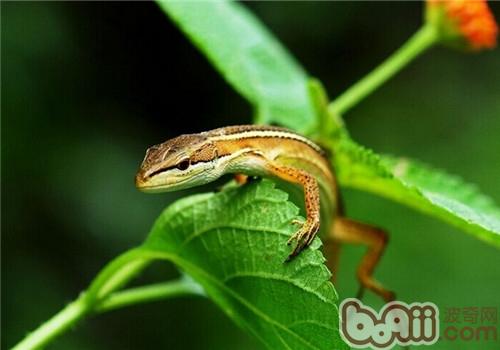
The Taiwan Grass Lizard (also locally called the Taiwan ‘snake aunt-mother’) is an endemic species native to Taiwan, where it is mainly distributed across the island. It prefers shrubby thickets, and its body color closely matches the natural surroundings, making it very hard to spot.
Chinese Name: Taiwan Grass Lizard
Chinese Alias: Taiwan She Jiuma (snake aunt-mother)
Binomial Name: Takydromus formosanus
Kingdom: Animalia
Phylum: Chordata
Class: Reptilia
Order: Squamata
Suborder: Lacertilia
Family: Lacertidae
Genus: Takydromus
Species: Takydromus formosanus
Distribution: Main island of Taiwan
2 Physical Characteristics
An adult Taiwan Grass Lizard ideally reaches about 21 cm in total length. A healthy individual appears lively, with bright alert eyes, strong limbs, and quick movements. The dorsal color closely resembles leaves and foliage, making it hard to identify in the wild.
The back is predominantly brown with greenish sides. There are three pairs of gular scales and two pairs of femoral pores. The snout-to-vent body length reaches up to 6 cm, while the tail can be two to three times the body length. The lower jaw has three pairs of chin shields. The dorsal surface is mainly brown, and both dorsal and ventral scales have distinct keels. The underside is whitish, and the hind legs typically bear two pairs of inguinal pores. (Note: Recent research (Lin, 2002) suggests that what was long considered a widely distributed Taiwan Grass Lizard is actually restricted to western Taiwan; mitochondrial DNA analysis indicates that northern and eastern populations previously attributed to this species represent new species, meaning Taiwan may gain two additional endemic lizard species.)
3 Behavior & Habitat
When keeping a Taiwan Grass Lizard, providing a comfortable living environment should take priority over rich feeding. Temperature control is the most important factor, since this lizard is ectothermic and highly sensitive to temperature. If you want your pet to grow up healthy and happy, set up a suitable habitat for it.
A suitably sized terrarium is needed, and UV exposure is indispensable. Nearly all lizards require sunlight to synthesize vitamin D for calcium absorption; without it they can develop metabolic bone disease (rickets) and die. Purchasing a UVB lamp is therefore essential. Indoor keepers who cannot provide natural sunbathing should use a UV or sun lamp for lighting. The enclosure should be fairly tall, with branches for climbing, and must include a water dish with clean drinking water.
4 Care Guidelines
The Taiwan Grass Lizard not only favors dense jungle but also comes out to bask; you may encounter it in the mountains or by roadsides, flattened against concrete, asphalt, or large rocks to absorb heat, or active in grasslands and shrubs. At night it often rests on the leaves of grasses. Its tail is capable of autotomy (self-amputation).
Its main diet consists of small insects such as crickets and dubia roaches. Mealworms are hard to digest; if fed, offer only freshly molted white ones. It needs at least one hour of unfiltered sunlight daily, even glass blocks the beneficial rays.
It is normal for captive Taiwan Grass Lizards to refuse food; wild-caught individuals commonly go off feed. Be patient and let them settle in quietly. Only if they refuse food for more than a month should you consider assisted feeding.