Search Results
98 results for “goldfish health”

Key Points for Keeping Goldfish Healthy
To keep goldfish healthy, follow core rules on tank choice, water quality, diet, and health observation. Pick a tank sized to the fish's number and size for enough swimming room, place it stably and quietly away from direct sun, keep the water clean with regular changes and a filter, and feed a balanced diet without overfeeding. Watch your fish's behavior and appearance to catch problems early.
What Affects a Goldfish’s Health
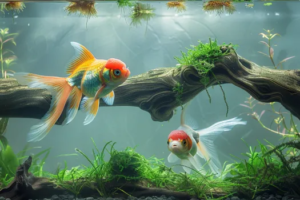
A goldfish's health hinges on stable water and sensible feeding: season and temperature swings, water quality and chlorine, dissolved oxygen, pH near 6.7–7.4, portion size, and change frequency all play a role. Keep temperature and water steady, dechlorinate tap water, avoid overfeeding, and change water sensibly to lower disease risk.

What Color Should Healthy Goldfish Droppings Be?
Healthy goldfish normally pass black or brown stool, tied to diet—bloodworms give brown, pellets give black, algae give green. Occasional white stool is fine if no other signs, but long white or stringy stool means digestive trouble—take note.
How to keep goldfish alive and healthy?
Use a large tank, at least 20 liters per fish, with filtration, an air pump, and a heater keeping 18-23 C. Feed proper goldfish food but avoid overfeeding to protect water quality.

How to Pick Healthy Goldfish
Picking healthy goldfish is the first step to keeping them well; beginners should choose carefully, but telling health apart is hard. Here are tips for selecting goldfish and preparing the tank.

Goldfish Moods and Behavior: Reading Their Emotional and Health Signals
Goldfish express distinct moods through their swimming and feeding behavior: active, eager swimming signals contentment, while prolonged bottom-sitting or lying on the side often points to stress, fear, or illness. Because low mood and sickness can look alike, judge a fish by its body color, gill condition, water quality, and appetite rather than behavior alone.
Why Do Goldfish Get Cloudy Eye (Moon Eye Disease)?
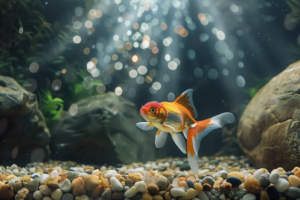
Cloudy eye in goldfish is mainly from bacteria or parasites, but the root cause is poor water quality—bad water lets pathogens breed, lowering resistance so they invade. Prevent by clearing waste and changing water regularly. Early signs are a white film on the eye, treatable with the 'old three methods'; if the eye turns clearly cloudy, add chlortetracycline or penicillin. Treat early.

Common Goldfish Diseases and Their Prevention
Common goldfish diseases include white spot (ich), cloudy eye, saprolegniasis, enteritis, fin/tail rot, and dropsy (pinecone disease). Learn these to prevent and lower illness risk. Water quality is the main health factor—keep it clean with regular changes and cleared waste to avoid bacterial growth and infection. Keep temperature steady and oxygen sufficient.

Why Is My Goldfish Losing Its Color (Fading)?
Goldfish color is affected by age, light, and water. As they age (past 4 years) fading is natural—no concern. But low light, wrong temperature, poor nutrition, or low oxygen also cause fading. Judge by the actual cause: add light (or a color lamp) for low light, and aerate for low oxygen.

What Foods Help Goldfish Grow and Develop?
Goldfish are omnivorous—they eat live animal food, plant matter, and prepared pellets. Live foods include bloodworms, daphnia, cyclops, paramecium, mosquito larvae, tubifex, mealworms, yellow mealworms. Plant foods: aquatic plants, algae, duckweed, tender greens, fruit. Newly hatched fry take boiled egg yolk, brine shrimp eggs, infusoria; ages 1–2 months mainly animal food; after 2 months, prepared food plus some animal/plant food.