Search Results
98 results for “goldfish health”

Notes on Keeping Goldfish in Winter
Winter's low temperature slows goldfish metabolism and weakens immunity, so adjust diet and water changes. Reduce feeding amount and frequency and lower change frequency. Avoid adding new fish in winter. Watch their condition for early signs; manage diet and water changes to lower illness risk.

Can You Feed Goldfish Rice?
Goldfish are omnivorous and can eat rice, but not too much. Rice is nutritionally one-sided and shouldn't be the staple; its starch can cause indigestion. Balance their diet—use goldfish pellets as staple, plus some plant/animal food and fruit. As ornamental fish, some live food also adds nutrition and color.

How to Choose Goldfish Food
Good goldfish food: pleasant smell, doesn't cloud water, not greasy, small size, doesn't swell in water, over 30% protein, and the fish like it. If fish won't eat it, even great food is useless, so preference is the basis. Good food smells fresh of shrimp/fish; bad smells of rot or sourness and is greasy from oil used to fake aroma.

How to Tell Good from Bad Goldfish Food
Judge food quality by color, smell, water stability, and size. Good pellets are dark yellow-brown, smell of soybean meal and fish meal, hold together in water, and aren't greasy. Greasy food uses oil-spraying, which harms fish. Smaller pellets are easier to eat and digest; imbalanced size wastes food and causes gut issues.

How Deep Should Goldfish Water Be?
Keep goldfish water 30-50 cm deep. Moderate depth aids swimming and growth; too shallow limits space, too deep hinders feeding and breathing. Ornamental types (butterfly tail, dragon-eye) prefer shallower water, active types (ryukin, Thai lion) prefer deeper. Adjust by the fish's behavior and keep water quality and oxygen good.

Why Is a Goldfish’s Whole Body Congested (Red)?
Whole-body congestion comes from poor water, big temperature swings, hemorrhagic disease, or too many harmful substances. Change water and keep it good, stabilize temperature, treat hemorrhagic disease with parasite removal and potassium permanganate/malachite green baths, and add coarse salt to prevent infection.

Why Does a Goldfish’s Tail Rot?
Goldfish tail rot comes from poor water, overcrowding, bacterial infection, or tail rot disease. Fix water promptly, lower density, isolate and bath infected fish with gentamicin, and for the disease use salt (early) or yellow powder/malachite green (severe). Disinfect the original tank to protect healthy fish.
Why Does a Goldfish’s Tail Droop?
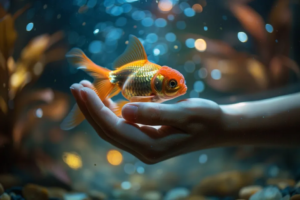
A drooping tail comes from poor water, low temperature, natural aging, or swim bladder disease. Fix water (change 1/3, temp swing under 2C), raise temp to 18-25C with a heater, accept aging as normal, or for swim bladder disease raise temp and add coarse salt. Keep water and temperature stable.

Goldfish Care Before and After Spawning
Before spawning, prepare a disinfected separate breeding tank with plants or a spawning mop, and keep a male:female ratio of 2:3 or 2:4. After laying and fertilization, remove the parents and keep water at 15-20C to hatch in 3-7 days. Feed fry yolk 2-3 days after hatching; keep oxygen ample and avoid water changes.

Goldfish Stress: Symptoms and What to Do
Stressed goldfish lie on the bottom, look unwell, eat and move less, and make more slime; severe cases show body congestion. Respond by fixing water (change, add microbial agent), oxygenating 24h, fasting, and keeping the environment quiet. Prevent with good, stable water, controlled temperature, and safe food.