Search Results
443 results for “full water change”
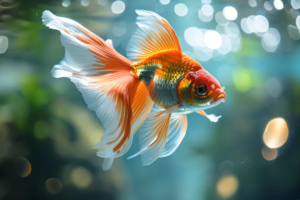
What to Do When Your Fish Tank Water Turns Green
Many fish keepers have seen their tank water turn green. This is usually caused by an overgrowth of green and brown algae, which crowds out plants and fish, absorbs oxygen, and can even release toxins. Here is how to fix it for good.

What to Keep in Mind When Changing Water for Your Arowana
Regular water changes are the first line of defense in keeping an arowana healthy, but doing it wrong can trigger refusal to eat, saprolegniasis, or cloudy eye. Proper care means pre-conditioning tap water to remove chlorine, changing only a small fraction at a time, keeping the flow gentle, avoiding feeding around the change, and watching the fish closely afterward.
Poor earlier housing with infrequent water changes; after improving it I found an unknown fleshy lump on the turtle’s front foot. Appetite and routine are unaffected. How to treat it?
A pus-filled white lump on the front foot may be scabies disease, a common turtle skin lesion mostly from mild Aeromonas hydrophila invasion, though some bacteria or fungi also cause it. Early cases still eat, then eat less, and severe cases stop eating and slow down.

Should You Soak Your Dog’s Kibble in Water? When It Helps and When It Doesn’t
Soaking kibble helps puppies (1–3 months), seniors, and dogs with mouth or digestion issues move to solid food gently. But healthy adult dogs shouldn't eat softened food long term — chewing dry kibble cleans teeth and prevents tartar. Keep water at ~40°C, soak just 5–10 minutes, and don't let it sit and breed bacteria.
Can I use tap water left standing overnight for my fish tank?
Tap water left out for only one night is still not safe for fish because the chlorine has not fully dissipated. Proper preparation takes at least three days of standing or a full day of sunlight.

Why Do Blood Parrot Cichlids Cluster and Rest at the Bottom?
Blood parrot cichlids huddling motionless at the bottom may just be settling into a new home, or it can signal illness, low temperature, or poor water. Give newcomers quiet time, raise the temperature to 28–30°C if it's cold, and for enteritis do a full water change with oxytetracycline/gentamicin baths plus added vitamins.
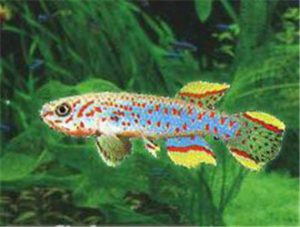
Aegean Killifish
The Aegean Killifish (Aphyosemion celiae) is native to West Africa and shaped like the harp killifish, 6-7 cm long. It likes weakly acidic water and higher temperature (optimal 24-28 C), eats live foods like bloodworms and artemia, and is hardy and easy to keep.
Silver Celestial Eye Goldfish
The Silver Celestial Eye Goldfish is a variety of Dragon-back goldfish whose eyeballs protrude from the sockets and turn upward and forward toward the sky, hence the name sky-gazing eye. It is a relatively rare goldfish variety.

Rosy Barb
The rosy barb is native to India. In the aquarium it reaches 5 to 7 cm, but in the wild it can grow to 14 to 15 cm. During breeding it shows a striking rosy-red nuptial coloration.

Yellow-bellied Slider
The Yellow-bellied Slider (Trachemys scripta scripta) is a common, hardy and inexpensive North American slider with a yellow belly and yellow 'ear' patches. Easy to keep but a messy, fast-eating carnivore-leaning omnivore.