Search Results
454 results for “fall”
How to Choose a Reliable, Budget-Friendly Dog Dewormer
Owners often swing between over-priced imports and risky unlicensed bargains—both can harm the dog. Deworming is non-negotiable: internal worms steal nutrition and damage the gut, while heartworm stays silent until it is serious, and external pests spread disease to people too. This guide explains why deworming matters, the active ingredients by parasite type (including the Collie warning on ivermectin), and how to choose and use a product safely—spectrum, convenience, credentials, correct dosing, and the myths that lead owners astray.
A Guide to Dog Dewormer Types and Active Ingredients
Spring warms the environment and multiplies parasites, and outdoor dogs are especially exposed to internal and external worms that cause poor nutrition, itchy skin, and organ damage. Deworming also protects people—some parasites spread to humans. With many brands and types, the smart move is to choose on proven ingredients and safety, not fame. This guide walks through the common active-ingredient classes—imidacloprid plus moxidectin, selamectin, fipronil, milbemycin, isoxazolines—and how to pick and dose safely for lasting protection.
CoQ10 for Dogs: Is It Worth the Hype?
CoQ10, or ubiquinone, is a fat-soluble compound that powers the heart and other high-demand organs through mitochondrial energy metabolism. Far from a gimmick, veterinary studies show it can improve heart function in dogs with mitral valve disease and congestive heart failure. This guide explains what CoQ10 does, why it is not a scam, which dogs benefit most, and how to supplement safely—including the drugs it must not be mixed with. It supports care but never replaces prescription heart medication.
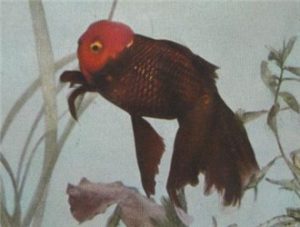
Brown Oranda with Red Head
The Brown Oranda with Red Head is a goldfish variety, a rather precious one of the Wen-jin group. Because it resembles the Purple Oranda, care is needed when buying to tell them apart.
Silver Celestial Eye Goldfish
The Silver Celestial Eye Goldfish is a variety of Dragon-back goldfish whose eyeballs protrude from the sockets and turn upward and forward toward the sky, hence the name sky-gazing eye. It is a relatively rare goldfish variety.

Leaf Fish
The Leaf Fish (Monocirrhus polyacanthus), also known as the Dead-leaf Fish or Many-spined Leaffish, is native to the Amazon River and Guyana. Its body form is so unusual that when motionless on the substrate it is almost indistinguishable from a fallen leaf.

Asian Arowana
The Asian Arowana is a primitive, endangered species known as a 'living fossil' and called 'Dragon Spitting Pearl' in Hong Kong. Resembling the legendary dragon, it is one of the most popular and expensive ornamental fish, distributed across Southeast Asia.

Four Pompon
The Four Pompon is a variety of goldfish with the classic Wen-style body shape. Its most distinctive feature is four enlarged, fluffy nasal pompons that set it apart from other goldfish. It shares the same general habits as common goldfish and is relatively easy to keep.
Double-banded Dwarf Cichlid
The double-banded dwarf cichlid was first found in 1906; in the wild it lives among layers of fallen leaves in the rainforest, so keep it with black-water treatment. It is fairly easy to keep, needing only stable water and temperature.

Splash Tetra
The Splash Tetra is a characin. Unlike others of its family that eat their own eggs, it protects them in a special way. Also called the Four-lined splashing tetra, it reaches 6–8 cm and is native to the Amazon basin.