Search Results
258 results for “ear position”

Canine Hip Dysplasia: A ‘Destiny’ for Large Breeds?
Hip dysplasia is a hereditary joint fault where the ball and socket fit poorly, loosening the joint and eventually causing arthritis. Large breeds like Golden, Lab, and Shepherd are most at risk. Early signs are subtle—occasional hind-limb limping, slow rising, reluctance on stairs—while advanced cases show a swaying gait and muscle loss. X-rays and PennHIP confirm it; weight control, gentle exercise, joint supplements, and vet-guided pain care slow its course.

Why Does My Dog Snore in Its Sleep?
Dog snoring usually means the upper airway has narrowed so throat tissue vibrates, but the trigger varies: a lodged object, a long soft palate in flat-faced breeds, excess weight, smoke or air pollution, infection, or simply sleeping on the back. Judge by the cause. Fix posture for back-sleepers, slim down an overweight dog, raise room humidity, and for flat-faced breeds ask a vet about trimming an over-long palate. Occasional snoring is usually fine.

Cat CoQ10 Buyer’s Guide: Reading Labels and Avoiding the Pitfalls
Roughly 15% of cats develop some form of heart disease, with seniors, flat-faced breeds, Ragdolls, and overweight or inactive cats at higher risk. CoQ10 supports cellular energy in heart muscle, but natural production drops as cats age. When choosing a supplement, the smart move is to read the label and judge the formula—not the marketing. This guide breaks down what to look for and the common traps to avoid.
Why is it said you shouldn’t shoo away a cat that shows up at your home?
Cats are seen as spiritual animals, and a cat that arrives on its own is said to symbolize incoming wealth - chasing it away might chase away your fortune, which is why the saying exists. True or not, most people can't bear to shoo a cute cat; if it's aloof or looks fierce, just feed it or let it leave, and if it's affectionate and you're able, consider adopting it.

Leaf Fish
The Leaf Fish (Monocirrhus polyacanthus), also known as the Dead-leaf Fish or Many-spined Leaffish, is native to the Amazon River and Guyana. Its body form is so unusual that when motionless on the substrate it is almost indistinguishable from a fallen leaf.

Bloodfin Tetra
The Bloodfin Tetra, also known as the Redfin Fish or Redfin Characin, is named for its silvery-white body and blood-red fins. Native to Argentina, it is a lively, schooling fish that is very easy to keep, requiring only stable water quality and nutritious food.

Kohaku
The Kohaku is the representative variety of koi, beloved by many hobbyists, and is increasingly kept as a feng shui fish. It was first discovered between 1804 and 1829, and was gradually developed into its present form through selective breeding.
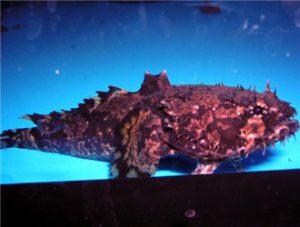
Toadfish
The toadfish shares the same body shape as the lionfish, with an enormous head that can account for up to one-third of its total body length. Also known as the freshwater lionfish, this species is remarkable for its ability to change body coloration to match its surroundings.
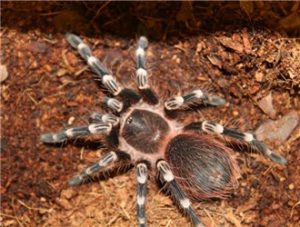
Brazilian Whiteknee Tarantula
The Brazilian whiteknee tarantula (Acanthoscurria geniculata) is a boldly black-and-white striped, fast-growing pet tarantula from Brazil — note that taxonomically it is an arachnid, not a reptile, but it is grouped here with the reptile-archive keepers' species.
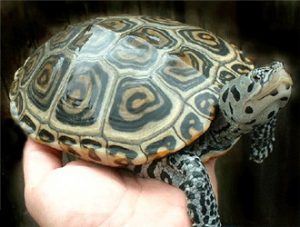
Northern Diamondback Terrapin
The Northern Diamondback Terrapin (Malaclemys terrapin terrapin), the nominate subspecies, is a semi-aquatic turtle native to the brackish estuaries of the U.S. Atlantic coast. Named for the diamond patterns on its shell, it is increasingly popular, reasonably priced, and not hard to keep — but it needs brackish water.