Search Results
51 results for “dog covers face”

American Shorthair
Among cat breeds, the American Shorthair is hugely popular with cat lovers. Its honest, good-natured looks are enough to make us want to bring one home. Below we discuss the American Shorthair breed, along with its price and how to buy one.

Silver Fox Rabbit
The Silver Fox Rabbit is a standard fur-breed rabbit with a soft, beautiful coat, but it has weak adaptability and has not been widely promoted or kept. Originating in the former Soviet Union, it is a precious fur-breed variety valued both for its pelt and as a pet.

Amami Rabbit
The Amami Rabbit, also known as the Ryukyu rabbit, is an ancient wild rabbit with short ears, native to Japan and considered a living fossil and close relative of the Arctic hare. It is listed as Endangered (EN) on the IUCN Red List.
When is a Rottweiler’s ear a “fly ear”?
A Rottweiler's ear is a fly ear when it sticks up; normally triangular and flat against the face. Some have pseudo fly ears that relax. Taping can correct it: fold outward, tape the middle, keep the base arched up for a day, repeat if needed.
How many owners does a German Shepherd bond with in its lifetime?
A German Shepherd typically bonds to just one person for life, remembering their scent and voice. Abuse or abandonment breaks that trust, and rebuilding it takes great patience and love.

Choosing a Cat Dewormer: Why Combination Spot-Ons Suit Multi-Cat Homes
For mostly-indoor cats, a broad-spectrum, gentle combination spot-on is the most cost-effective and stress-free choice—and because most cats hate pills, a transdermal drop avoids force-feeding and the anxiety it causes, which is ideal for beginners and multi-cat households. Useful active types include imidacloprid-moxidectin (prevents a dozen-plus internal and external parasites and heartworm), fipronil-methoprene-eprinomectin-praziquantel (adds tapeworm and tick coverage for outdoor or raw-fed cats), and selamectin (very gentle from six weeks, pregnancy-friendly). In a multi-cat home the real work is operational: deworm all cats together, dose strictly by weight, use an Elizabethan collar and separation to stop licking, and avoid baths 48 hours around treatment. Above all, prevention beats treatment.

What to Keep in Mind When Using Topical Flea and Tick Treatment on Cats
Cats can pick up external parasites at any time of year, so regular preventive treatment matters. Topical products come as sprays or spot-on drops, and their coverage depends on the active ingredient, so the right choice depends on your cat's lifestyle and the parasites it faces. Apply spots along the spine, dose by weight, avoid bathing for a few days, and use an Elizabethan collar to prevent licking. Kittens can start around two months old with monthly treatment; adults need it every one to three months, more often in warm seasons or for outdoor cats. Never use dog-only products containing permethrin on cats.

Are Corgis Prone to Patellar Luxation?
Corgis are indeed a high-risk breed for patellar luxation. Data from the Orthopedic Foundation for Animals (OFA) puts corgis in the top three among small breeds, with about 20%–30% developing some degree of the condition. The cause is twofold: a genetic mutation that leaves the trochlear groove too shallow to hold the kneecap, and a short-leg bone structure that angles the femur and tibia inward by 15°–20° more than usual, pushing the patella out of place. The problem is graded I–IV, from occasional skip-hopping to permanent dislocation. Mild cases are managed with joint supplements and limited exercise, while grades III–IV usually need surgery. Keeping the dog at a healthy weight and avoiding stairs and jumping are the best prevention.

Emergency Care for a Pet With Heatstroke
Dogs cool only through their paw pads and tongue, so a thick coat turns summer into a sweater; heat, humidity, no water, hard exercise, or even clothes and shoes can tip them into heatstroke. Know the signs, and if you cannot reach a clinic, cool the body safely while rushing for help. This guide covers causes, symptoms, and emergency steps.
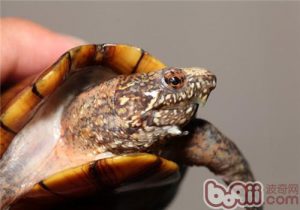
Kinosternon acutum (Tabasco Mud Turtle)
The Tabasco mud turtle (Kinosternon acutum) is a medium-sized mud turtle prized for its vivid head striping, found mainly in the Mexican Caribbean lowlands. It is rarer than the narrow-bridged musk turtle and seldom seen on the market.