Silver Fox Rabbit
2 Photo Gallery
1 Silver Fox Rabbit Breed Overview
The Silver Fox Rabbit is a standard fur-breed rabbit. Although its coat is not very long, it is extremely soft and beautiful. However, the Silver Fox Rabbit has relatively weak adaptability, so it has not been widely promoted or kept.
Chinese Name: Silver Fox Rabbit
Alias: Flemish Giant
Kingdom: Animalia
Phylum: Chordata
Subphylum: Vertebrata
Class: Mammalia
Order: Lagomorpha
Family: Leporidae
Genus: Oryctolagus (Rabbit)
Species: Ira Rabbit (commercial hybrid)
Origin: Former Soviet Union
Distribution: The Silver Fox Rabbit originated in the former Soviet Union. It was developed from a mutation of the Chinchilla Rabbit (see details). It is a precious fur-breed rabbit variety.
Appearance: The Silver Fox Rabbit has a long body, a medium-sized head and face, a thick short neck, and well-developed forelimbs and hindquarters, with a strong constitution.
Breed Performance: The Silver Fox Rabbit is highly prolific, producing 6–7 kits per litter, with a high survival rate of the young and fast growth and development. Adult does weigh 4.25–5.5 kg and bucks 4–5 kg. The Silver Fox Rabbit has weak disease resistance and poor adaptability. It has been introduced in some provinces and regions in northern China.
2 Silver Fox Rabbit Physical Characteristics
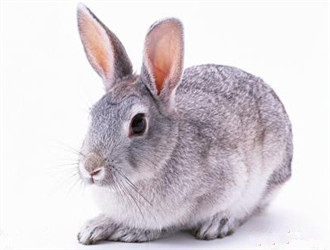
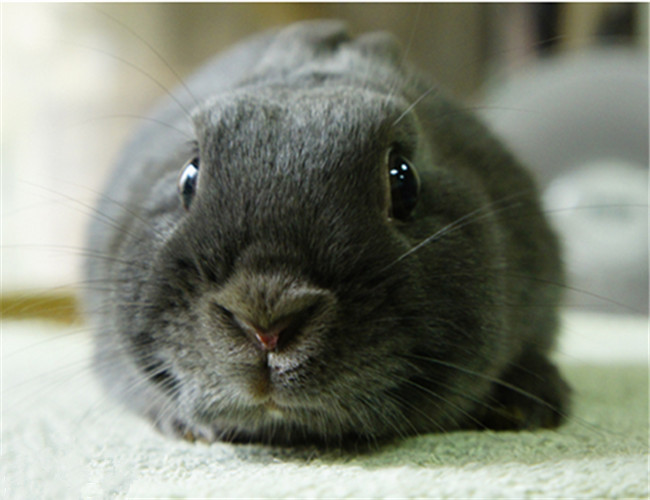
The Silver Fox Rabbit has a moderately long coat with gorgeous coloration. It has a relatively large head, broad thick upright ears, a broad body, and a very lovable appearance. It is a relatively fine fur-breed rabbit, but some people also keep it as a pet rabbit.
The Silver Fox Rabbit has a long body, a medium-sized head and face, a thick short neck, and well-developed forelimbs and hindquarters, with a strong constitution. Its basic coat color is black-brown, mixed with silver-gray hairs. The coat is soft and dense, and it looks very much like a silver fox; the fur is beautiful and can be used directly without dyeing. Newborn kits have an all-black coat, which gradually turns deep blue afterward. After the first shed of the baby coat, silver-gray guard hairs gradually appear from the center of the rump and then spread over the whole body.
The Silver Fox Rabbit has 7 strains: steel gray, black, blue, white, and light brown, etc. The steel gray is more common in the United States and is slightly smaller than other European strains, with adult does averaging 5.9 kg and bucks 5.4 kg. The large type can reach 9 kg; the British white strain has red eyes, larger head and ears, and a dense, glossy coat. The black strain also has black eyes. The Silver Fox Rabbit has influenced the development of many large rabbit breeds, but its drawbacks are low fertility and late maturity.
3 Silver Fox Rabbit Care Tips
In the management of keeping Silver Fox Rabbits, grooming, nail trimming, and hygiene cleaning are relatively important. Some people bathe Silver Fox Rabbits, but this is not especially recommended. The difference between Silver Fox Rabbits and other rabbits is their very poor adaptability; bathing can easily lead to illness.
I. Silver Fox Rabbit Molting
The Silver Fox Rabbit is an animal of cold, dry regions. Due to season, disease, and malnutrition—which are not normal molting factors—rabbit fur falls out and new fur grows at the bare spots; this is the molting phenomenon. A Silver Fox Rabbit has 2 age-related molts in its life, at 30–100 days and 130–180 days respectively. This is a normal phenomenon of the Silver Fox Rabbit’s growth and development. When the rabbit matures, seasonal molting appears, twice a year, in spring-summer (March–April) and autumn-winter (September–October). Seasonal molting is related to temperature, light, and nutrition.
II. Trimming Silver Fox Rabbit Nails
A Silver Fox Rabbit’s nails grow continuously, just like human nails. Wild Silver Fox Rabbits wear their nails down naturally through digging, but domestic ones cannot wear them down by digging and must be helped by humans. When trimming a Silver Fox Rabbit’s nails, you can see the thin blood vessel in the nail; be careful not to cut the part that covers the flesh. If you accidentally cut the vessel, you can use a clean tool to apply styptic powder (Yunnan Baiyao also works) to the wound, keep the wound clean, and prevent secondary infection.
III. Cleaning Silver Fox Rabbit Fur
For the damp-towel cleaning method, gently comb open the dirty fur and wipe repeatedly with a damp towel. If it is very dirty, simply cut off a portion—do not cut too short. For partially dirty areas, you can rinse with warm water at 38–41.5°C; after cleaning, blow the fur dry to avoid death from loss of body heat.
4 Silver Fox Rabbit Living Environment
To keep a Silver Fox Rabbit, you must provide a reasonable living space. Both temperature and humidity control must reach reasonable values. The Silver Fox Rabbit has high environmental requirements and also has difficulty adapting to the environment, so keeping the environment excellent at all times is important.
The Silver Fox Rabbit asks for little: a suitable space and the correct appropriate food and water every day. The Silver Fox Rabbit is quieter than cats and dogs, but owners should also pay attention to whether the keeping method is correct.
The Silver Fox Rabbit fears heat because it lacks sweat glands and has a dense coat, so it cannot dissipate heat through the skin; it mainly regulates body temperature through its ears and respiration and excretion. When the temperature reaches above 30°C, its breathing rate increases. Adult Silver Fox Rabbits fear heat rather than cold, but young ones need special attention to warmth because their temperature-regulation function is not fully developed.
The Silver Fox Rabbit does not tolerate humidity; when humidity is too high it easily gets sick, and it also does not tolerate heat, so special attention is needed during the rainy season or summer. The cage should be kept clean and dry at all times, and bedding should be checked and replaced promptly.
The correct way to hold it: the Silver Fox Rabbit strongly resists having its hind legs lifted or suspended; in such a situation it will struggle and scream. Moreover, a rabbit’s bones are more fragile than its muscles; violent struggling can easily cause a spinal fracture and death. When picking up a Silver Fox Rabbit, keep the hind legs close to the chest and let the hind legs rest against something. Prevent bucks from escaping.
5 Silver Fox Rabbit Feeding Guidelines
The Silver Fox Rabbit eats a very single type of food. How can it obtain corresponding nutrition from a single food? In fact, as long as the feeding method is proper, the Silver Fox Rabbit can absorb nutrition from plants and stay healthy.
I. Food Selection
1. Feed: Rich in minerals and trace elements, and must contain a high amount of crude fiber to promote intestinal peristalsis, aid digestion, and prevent hairball syndrome. Fat should be low to prevent the Silver Fox Rabbit from becoming overweight.
2. Hay: High in fiber, helps the Silver Fox Rabbit’s normal excretion, with balanced nutrients.
3. Drinking water: The Silver Fox Rabbit also needs to drink water; it’s just that its urination is concentrated (like a person’s nighttime sleep urination), so it needs a little less water than other animals, but that does not mean it does not need water. When buying a Silver Fox Rabbit, some merchants deliberately withhold water so the rabbit, lacking water, stops eating feed and grows slowly into a ‘mini rabbit,’ but such a rabbit is malnourished. Once you bring it home and give it water, it may die from drinking too much. So some people think the Silver Fox Rabbit should be restricted from drinking water.
II. Feeding Method
Silver Fox Rabbits are herbivorous, and their feed content is roughly the same, but the feeding method is slightly different. Because the Silver Fox Rabbit does not have the habit of storing food, it must be fed twice a day, morning and evening. Because it is a nocturnal animal, the evening feeding should be a bit larger. The Silver Fox Rabbit’s appetite may change with the weather—decreasing when it is hot and increasing when it is cold. This is normal; observe more.