Search Results
810 results for “cat space”

Can Rabbit Ringworm Spread to Humans?
Yes — rabbit ringworm is a fungal infection and is zoonotic, so people can catch it. Isolate the infected rabbit, clean and treat the lesions, disinfect its belongings, and support its immunity; keep the environment clean and dry to prevent recurrence.

Why Won’t a Newly Bought Parrot Eat or Drink?
It is common for a newly bought parrot to refuse food and water for a day or two — usually out of fear of its new surroundings and a sudden change in diet. Keep the environment calm, provide food and water, and cover the cage if it stays frantic; watch for ruffled feathers, lethargy, or diarrhea, which point to a sick bird.

What Does Arowana Drop-Eye Mean?
Drop-eye is a normal physiological phenomenon in arowana, common in fish kept in aquariums, and silver arowana are even more prone to it. Drop-eye does not affect health but seriously impacts appearance and reduces ornamental value. Keepers should take preventive measures. Our veterinarian mainly introduces the causes of arowana drop-eye to help with prevention.
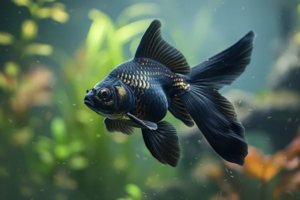
Common Reasons an Arowana Stops Eating
An arowana may refuse food because it is stressed by a new environment, the water has gone bad, the diet is too monotonous, it has a cold, it has internal parasites, or it has enteritis. Pinpoint the exact cause—stable water, a short fast, then targeted treatment—before resuming feeding.

Why Your Budgie Screams at Night and How to Stop It
Budgies are diurnal and normally settle down at night, so persistent screaming after dark usually signals stress, hunger, or a disrupted routine. Common triggers include fright, an off schedule, nighttime noise, and an unstable perch. You can quiet a noisy bird by fixing its light and quiet, offering food and water before bed, and using calm, consistent training.

Can a Puppy With a Runny Nose Get Vaccinated?
Dogs showing any sign of illness—such as a runny nose, sneezing, vomiting, or diarrhea—should not be vaccinated, because live-attenuated vaccines can worsen an existing condition. Puppies need to be at least 45 days old for their first shot and about 3 months old for the rabies vaccine, with deworming spaced roughly a week apart. After vaccination, observe the dog for 30 minutes, avoid baths for 7 days, and confirm immunity with an antibody test around 15 days later.

British Shorthair
The British Shorthair is a compact, powerful, easygoing cat with a round face, dense short coat, and large round eyes. With a history tracing to Roman times, it became a recognized breed in 19th-century Britain and is beloved for its calm, friendly, adaptable nature—an ideal companion that gets along with everyone.

Russian Blue
The Russian Blue, also called Russian Blue, Archangel Blue, or Maltese cat, with English name Russian Blue, is known as the 'aristocrat of shorthairs' and 'elf of winter.' Originating in the 19th century, once only in Russia, now worldwide. Few in number globally; buying one costs at least tens of thousands. Cheap ones are hybrids.

Oriental Shorthair
The Oriental Shorthair is a distinct breed, unexpectedly produced by breeders while developing another cat. They wanted a pure-white Siamese, so crossed Siamese with pure-white cats, producing today's Oriental. Though born in 1962, it was recognized as a new breed in 1972. Its appearance is close to the Siamese but differs greatly in coat color.

Balinese
Balinese (details)