Search Results
228 results for “bone development”

Why Puppies Get a Double Row of Teeth
Around eight to nine months a puppy's baby teeth should give way to clean adult teeth, but sometimes a permanent tooth grows in while the baby tooth refuses to fall, leaving two rows jammed together. This 'double dentition' hurts more than looks: it misaligns the bite and traps food and bacteria that cause bad breath and tartar. Small breeds like Poodles, Pomeranians, Chihuahuas, Yorkies and Schnauzers are most at risk. The fix ranges from hard kibble and calcium to chew toys, and only veterinary extraction after 18 months if baby teeth persist.

Colombian Wood Turtle
The Colombian wood turtle (Rhinoclemmys melanosterna), also called the black-bellied wood turtle, is a vividly marked, entirely dark-plumaged member of the American wood-turtle genus. A tropical, aquatic omnivore from northwestern South America.
Furrowed Wood Turtle
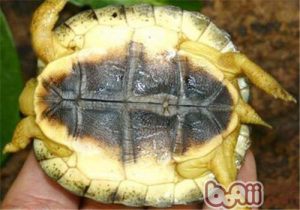
The furrowed wood turtle (Rhinoclemmys areolata) is an aquatic, strong-swimming turtle from the Yucatán Peninsula. Omnivorous but plant-leaning in the wild, it is scarce in the pet trade and can be difficult to acquire.
Lobatse Hingeback Tortoise
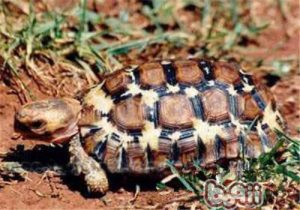
The Lobatse hingeback tortoise (Kinixys lobatsiana) is a relatively dry-adapted hingeback found in Botswana and South Africa. Though its range has two distinct rainy seasons, its habitat remains very hot overall, and it is seldom kept due to its rarity and similarity to other hingebacks.
Kinosternon alamosae (Alamos Mud Turtle)
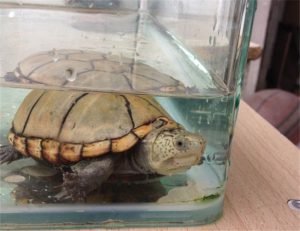
The Alamos mud turtle lives in aquatic-rich habitats and unique ponds, retreating into mud to aestivate during dry periods. In the wild it eats insects, small shrimp, and other invertebrates, and is a shy turtle that withdraws into its shell when threatened.

Mammary Tumors in Dogs and Cats
Mammary tumors are common in intact female dogs and are the third most common feline tumor. They often appear as firm nodules in the mammary chain and can ulcerate or spread to lymph nodes and lungs. Early spaying sharply lowers risk, and surgery is the main treatment.

Multiple Cartilaginous Exostoses in Dogs and Cats: Symptoms, Treatment, and Prevention
Multiple cartilaginous exostoses (multiple osteochondromas) are benign bony outgrowths that can appear on the spine, ribs, and long bones of young dogs and cats, possibly inherited. They are painless until they press on a tendon, vessel, or nerve, causing lameness, pain, or incoordination; otherwise no treatment is needed, but symptomatic ones are removed surgically.

Hip Dysplasia in Dogs and Cats: Symptoms, Treatment, and Prevention
Hip dysplasia is a hereditary developmental disorder of the hip joint influenced by genetics and environment, common in large breeds such as shepherds and setters. Progressive laxity and deformity cause lameness, reluctance to rise, and a characteristic 'bunny-hopping' gait; management is conservative with weight control and pain relief, and surgery is considered case by case.

Elbow Dysplasia in Dogs and Cats: Symptoms, Treatment, and Prevention
Elbow dysplasia is a group of inherited developmental elbow joint diseases - ununited anconeal process, fragmented medial coronoid process, and osteochondritis of the medial humeral condyle - driven by genetics and rapid growth. It causes forelimb lameness, a reluctance to walk, and sometimes a crackling joint sound. Weight control, pain relief, and surgery in severe cases are the mainstays.

Eosinophilic Panosteitis in Dogs and Cats: Symptoms, Treatment, and Prevention
Eosinophilic panosteitis, also called panosteitis, is a spontaneous, self-limiting bone-sclerosis disorder of young, fast-growing large-breed dogs, especially German Shepherds. It causes shifting lameness that moves between limbs over a cycle of roughly three months and usually resolves by 18 to 20 months of age.