Search Results
1199 results for “body temperature”

Tuatara
The tuatara (Sphenodon punctatus) is one of the oldest surviving reptiles, a nocturnal inhabitant of the rocky coastlines and seabird burrows of New Zealand's offshore islands. It predates the dinosaurs and is the sole surviving member of the order Rhynchocephalia.
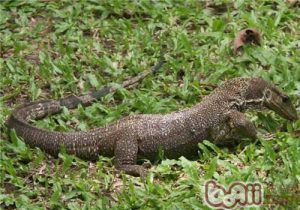
Yellow Monitor
The yellow monitor (Varanus flavescens) is a moderately large monitor lizard named for its yellowish coloration. Found across the floodplains of the Indus, Ganges, and Brahmaputra rivers in India, Pakistan, Nepal, and Bangladesh, it favors damp environments and is rarely kept as a pet.
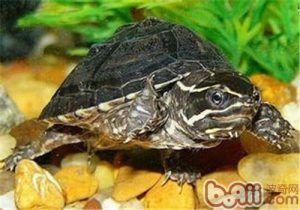
Mud Turtle
The Mud Turtle is not a single species but a group of turtles sharing common traits in body structure or distribution, classified under one family. The family Kinosternidae includes the mud turtles and musk turtles.

East African Black Mud Turtle
The East African Black Mud Turtle is scarce in the wild and thus rarely kept in captivity; in China it is uncommon, though other side-neck species are seen more often, indicating its rarity and need for protection. It eats both plants and animals, living in shallow water and occasionally climbing onto land.
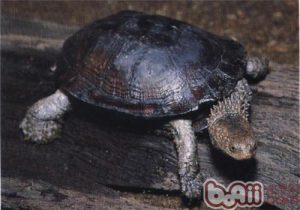
Chaco Side-necked Turtle
The Chaco Side-necked Turtle is a turtle of the genus Acanthochelys, first found in Argentina, Paraguay, and Bolivia. Because side-necked turtles are taxonomically complex, identifying species by appearance alone is difficult, and the Chaco Side-necked Turtle is neither widespread nor commonly seen in the market.
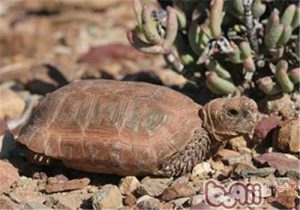
Boulenger’s Cape Tortoise
Boulenger's Cape Tortoise (Homopus boulengeri) is a rare and little-studied tortoise from South Africa's Karoo region, resembling the Speckled Cape Tortoise but slightly larger and reaching up to 13 cm. Few are kept in captivity, and conservation awareness for this species remains limited.

Berger’s Cape Tortoise
Berger's Cape Tortoise is a small tortoise native to the coastal regions of Namibia and western South Africa, where it shelters among rock crevices and feeds on the flowers and fruits of plants such as cucumbers, gourds, grapes, and figs, reproducing by laying eggs.

Hydromedusa maximiliani (Brazilian Snake-necked Turtle)
The Brazilian snake-necked turtle (Hydromedusa maximiliani) is the smallest Brazilian freshwater turtle, found in cold, fast streams of the Atlantic montane rainforest. It is rare, expensive, and listed as Vulnerable by the IUCN.
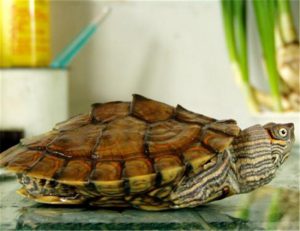
Graptemys pseudogeographica (False Map Turtle)
The false map turtle is a map turtle that is less commonly kept than sliders, needing clean water and a quiet environment. It is omnivorous but especially loves shrimp, and is distinguished by bright yellow markings behind the eyes.

Pyxis planicauda (Malagasy Flat-tailed Tortoise)
The flat-tailed tortoise is found along the west coast of Madagascar, closely resembling the spider tortoise but recognized as a distinct species. It is a shy, mostly herbivorous tortoise that aestivates through the dry season.