Search Results
99 results for “black scales”

Chaco Tortoise
The Chaco Tortoise (Chelonoidis chilensis), long misnamed the Argentine or 'Chilean' tortoise, is a rare South American tortoise from the Gran Chaco of Argentina, Paraguay, Bolivia, and Brazil. Closely related to red- and yellow-footed tortoises, it is attractive but delicate and disease-prone, so best left to experienced keepers.

Checkered Keelback
The Checkered Keelback (Xenochrophis piscator), known in Chinese as Yu You She (aliases Yu She, Cao Hua She), is a common, semi-aquatic, non-venomous snake across southern and eastern Asia. It is bold and readily strikes when threatened, so cautious handling is required despite its lack of venom.
Cochin Forest Cane Turtle
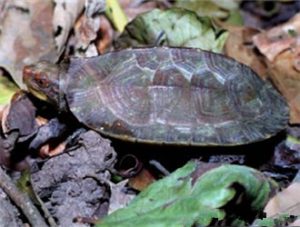
The Cochin Forest Cane Turtle (Vijayachelys silvatica) is a rare, semi-aquatic turtle from the forested hills of southern India above 300 m. Secretive and burrowing, it is seldom seen in trade and hard to keep.
Burmese Mountain Tortoise
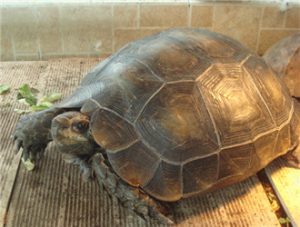
The Burmese Mountain Tortoise (Manouria emys) is one of Asia's largest tortoises, a shy forest dweller from western India to Vietnam and Sumatra. It loves warmth and humidity, shuns bright light, and is a committed herbivore that rarely accepts animal food.
Tiger Barb (Puntigrus tetrazona)
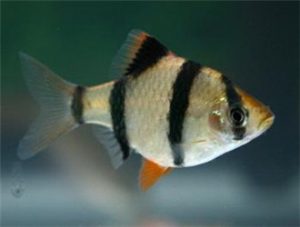
The tiger barb (Puntigrus tetrazona), also called the four-banded barb, is a very common tropical fish native to Malaysia. Named for its tiger-stripe scales, it is lively, fast-swimming, and schooling—best kept in groups and not with slow, long-finned tankmates.

Altum Angelfish (Pterophyllum altum)
The altum angelfish (Pterophyllum altum) is found in the Orinoco basin of Venezuela and Colombia. Not very hard to keep, but it needs oxygen-rich, roomy water and must not be frightened. Because it is hard to tame, artificial breeding is difficult and it should not be mixed with small fish.

Plecostomus
The Plecostomus — the 'sucker fish' or 'garbage fish' — clings to glass and plants scraping algae, but it is no miracle cleaner: it eats prepared food, nibbles slow tankmates, and makes heavy waste. A scaleless, salt-sensitive tropical catfish from South America, it needs soft, warm water and lives 8–10 years.

Golden Arowana
The Golden Arowana is an ancient, gold-scaled Asian arowana kept as a feng-shui 'underwater overlord.' Fiercely territorial and best kept alone in a covered tank at 28°C, it lives 10–20 years; slow growth builds the densest, brightest gold sheen, fed on small fish and shrimp rather than insects.

Koi
Koi (Cyprinus carpio) are ornamental carp kept worldwide as pond fish and symbols of good fortune. Hardy and long-lived — often 60 to 70 years — they are relatively easy to keep, but steady water quality, correct temperature, and a good diet are what keep their colors vivid and their health strong.

Silver Arowana
The silver arowana (Osteoglossum bicirrhosum) is a large, dragon-shaped fish named for its silver scales; adults reach 90–100 cm. It needs a big covered tank, plenty of light, and a meat-based diet of shrimp, fish and insects.