Search Results
93 results for “bird diet”

Mud Turtle
The Mud Turtle is not a single species but a group of turtles sharing common traits in body structure or distribution, classified under one family. The family Kinosternidae includes the mud turtles and musk turtles.

East African Black Mud Turtle
The East African Black Mud Turtle is scarce in the wild and thus rarely kept in captivity; in China it is uncommon, though other side-neck species are seen more often, indicating its rarity and need for protection. It eats both plants and animals, living in shallow water and occasionally climbing onto land.

Adanson’s Mud Turtle
The Adanson's Mud Turtle is a small, seldom-seen aquatic turtle from central Africa, a minor member of the African side-neck genus. Although not internationally listed as endangered, it is rarely traded.

Creaser’s Mud Turtle
Creaser's Mud Turtle (Kinosternon creaseri) is a lesser-known mud turtle with a dark shell and pale head. Known for its aggression and strong territoriality, it is rarely kept in captivity and seldom seen in the market.

Oaxaca Mud Turtle
The Oaxaca Mud Turtle (Kinosternon oaxacae) is a type of mud turtle that aestivates in summer, burying itself in mud to cool down—hence its name. Living in slow-moving rivers, it hunts fish and shrimp in the water and is an omnivore that leans carnivorous.
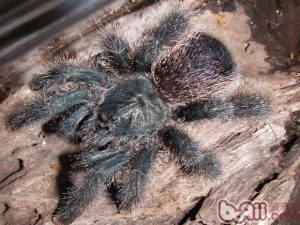
Avicularia braunshauseni
The Brazilian pinktoe tarantula (Avicularia braunshauseni) is native to the tropical rainforests of Brazil.

Acanthoscurria insubtilis
The Bolivian whitefront (also called the Bolivian whiteknee), Acanthoscurria insubtilis, is native to Bolivia. A slightly moist substrate of peat blocks or coconut fiber is recommended.

Lasiodora klugi
The Bahia scarlet tarantula (Lasiodora klugi) is native to the tropical rainforests of Bahia state, Brazil.

Acanthoscurria juruenicola
The Brazilian orange-banded tarantula (Acanthoscurria juruenicola) is native to Brazil and Peru — another large species from Brazil. Overall brown with orange markings at the joints, a deep black carapace, and red hairs on the abdomen, the color combination is striking. Like the Brazilian whiteknee, the spiderlings are almost grey-white and will dig to hide.

Phormictopus cancerides
The Haitian brown tarantula (Phormictopus cancerides), also known as the Dominican blue tarantula, is native to the tropical rainforests of Haiti and Brazil. It is one of the classic pet tarantula species kept by enthusiasts.