Search Results
42 results for “beginner turtle care”

What to Do When a Turtle Won’t Eat for Days
A turtle refusing food for days is usually environmental — new surroundings, low temperature, shallow water, or illness. Keep water 10–15 cm deep, hold 22–25°C, change water often, and tempt with shrimp or raw meat (never salty food); see a vet if it persists.
What turtles are easy to keep and cheap?
Easy, inexpensive turtles include the Chinese pond turtle, Sulcata tortoise, yellow-spotted river turtle, mud turtle, and red-eared slider. They are hardy, low-cost, and good for beginners.

Do Turtles Shed Their Shell? Why Do They Molt?
Turtles shed their scutes as they grow — a normal process beginners often confuse with shell rot. Here is why it happens, how to tell it apart from rot, and how to care for a molting turtle.

What to Do When a Newly Bought Turtle Won’t Eat?
A new turtle refusing food is normal while it adjusts to its home, but it can also mean low temperature, deep water, or illness. Here are the common causes and how to coax it to eat.
Which Turtles Are Best for Beginners?
Good starter turtles include the Chinese pond turtle, red-eared slider, musk mud turtle, hybrid flower-pond turtle, and common snapping turtle. These species are inexpensive, adaptable, and resilient, so beginners can practice with them. Many new keepers start with the Chinese pond turtle or red-eared slider. As long as basic mistakes are avoided and the turtles are cared for attentively, they can thrive. The most important management tasks are clean water, stable warm temperatures, and a proper basking area to reduce illness.
How to Care for a Red-Eared Slider (Brazilian Turtle)
Red-eared sliders, often called Brazilian turtles, are inexpensive and hardy, which makes them a popular first pet turtle. But like any reptile, they need the right setup to stay healthy. Provide a spacious aquarium or tub so the turtle can swim freely, keep the water between 20 and 30 degrees Celsius with a heater, and add a basking platform or dry land where it can climb out to warm up and rest. Without natural sunlight, use a UVB lamp to support calcium absorption and shell development. Change the water regularly and keep the substrate clean to prevent infection. Feed a balanced omnivorous diet of vegetables, fruit, insects, and quality pellets, with calcium and vitamin supplements. With consistent care, your turtle can thrive for years.

Eastern Box Turtle (Carolina Box Turtle)
The familiar Carolina box turtle of eastern North America - high-domed, fireworks-patterned, and a classic (if pricey) beginner-terrestrial box turtle. Loves soaking but cannot swim.

Asian Leaf Turtle
A common, beginner-friendly semi-aquatic turtle of the genus Cyclemys - four subspecies differ in shell and neck pattern; hardy and interactive, great for newcomers.

Amboina Box Turtle
The most common and cheapest of the seven box turtles (Cuora amboinensis) - shy, very aquatic, and the most beginner-friendly of the box turtles.
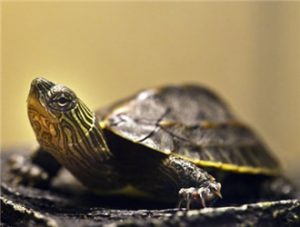
Chinese Striped-neck Turtle
A pretty, beginner-friendly Asian water turtle with green-and-black neck stripes and pearly juvenile edge spots - common captive-bred, but wild stocks are scarce.