Search Results
2848 results for “balance”

American Flagfish
The American flagfish is an upper-water fish with an aggressive temperament; when it strikes prey its speed and impact are formidable. Its unusual body shape makes it a notably fast swimmer.
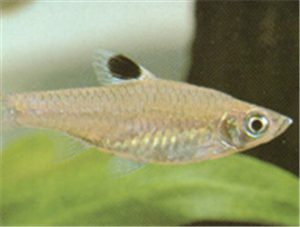
Blue-eye Rasbora
The Blue-eye Rasbora is actually silver-white, but its eyes shimmer blue-green in the lower half under light, hence the name.

Blue Oranda
The Blue Oranda is a goldfish variety, distinctive for its sky-blue or pale-blue body, hence popular. As a goldfish it is easy to keep and not demanding about water.
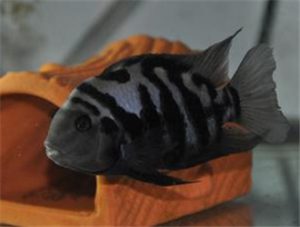
Convict Cichlid
The Convict Cichlid (Nine-bar) is a small cichlid among American cichlids. Despite its small size it is tough, often beating larger fish. Easy to keep and sturdy, its toughness makes it good with large cichlids.

Golden Monkey Flowerhorn
The Golden Monkey Flowerhorn is a Flowerhorn strain with the eyes of the Gold Flower line. Its greatest feature is a body red in the front half and golden-yellow in the back. It is now a beloved variety.

Tomato Clownfish
The Tomato Clownfish is a common clownfish variety; the hero 'Nemo' in Finding Nemo is this species. Because it is smaller than other clownfish, a tank of at least 90 liters is recommended.

Splash Tetra
The Splash Tetra is a characin. Unlike others of its family that eat their own eggs, it protects them in a special way. Also called the Four-lined splashing tetra, it reaches 6–8 cm and is native to the Amazon basin.
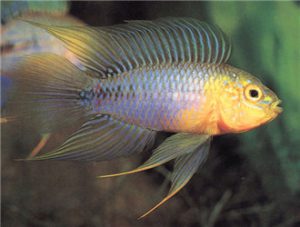
Borelli’s Dwarf Cichlid
The Borelli's Dwarf Cichlid is one of the more distinctive dwarf cichlids. Like other dwarfs it tolerates low temperatures and is not demanding about water quality, so it is easy to keep.
Golden Tetra
The Golden Tetra has a very distinctive appearance. Although a tetra, note that its shimmering golden-yellow body comes from a parasitic bacterial glow. Under aquarium lighting it looks especially beautiful.

Yellow Oranda
The Yellow Oranda is a goldfish variety. Because goldfish varieties are so varied and still being hybridized, hobbyists with little experience may confuse them, but the Yellow Oranda has distinctive features. Its head growth is especially notable.