Search Results
2849 results for “balance”

Turkish Angora
The Turkish Angora, named for Turkey's capital Ankara, is one of the oldest long-haired breeds, dating to the 16th century. Elegant with silky, medium-length coat and almond eyes, it is agile, independent, and famously fond of water. Once nearly supplanted by the Persian, it was revived in the US from 1963 and is now carefully bred to preserve its pure bloodline.

Siberian
The Siberian Forest Cat, shortened to Siberian Cat, has the earliest written records from the 11th century: it was a very common cat in Russian markets and Siberian villages. Living in a harsh country, it is covered in long fur with a thick ruff around the neck. Its outer guard hairs are hard, smooth, and oily, and its dense undercoat resists the Siberian cold.
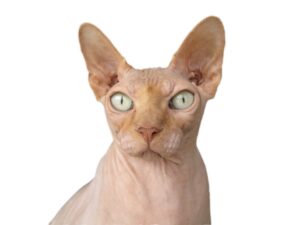
Sphynx
Sphynx (details)

Chartreux
The Chartreux, also called the Chartreux Blue Cat, has the English name Chartreux. Native to France, its history dates to the 14th century. Together with the British Shorthair Blue and the Russian Blue, it is one of the world's three great blue cats. The Chartreux has a long history, recorded in publications as early as 1558.

Oriental Shorthair
The Oriental Shorthair is a distinct breed, unexpectedly produced by breeders while developing another cat. They wanted a pure-white Siamese, so crossed Siamese with pure-white cats, producing today's Oriental. Though born in 1962, it was recognized as a new breed in 1972. Its appearance is close to the Siamese but differs greatly in coat color.

Somali
The Somali cat looks much like the Abyssinian—slender, slightly rounded, with big V-shaped ears and almond eyes—but with a semi-long, soft, dense coat. Developed in the US and Canada from a spontaneous long-haired mutation of the Abyssinian, the Somali is intelligent, gentle, playful, and water-loving, though its abundant coat needs regular grooming.

Canadian Hairless
The Canadian Hairless, also called the Sphynx, is an extremely rare hairless genetic variant that appeared during the breeding of American or European domestic cats. Although it shares the skin pigment of domestic cats, its skin bears only a few hairs. With a wedge-shaped body, large ears, and a bulky frame, its head looks like Yoda's. The whole look makes it seem not cute but rather frightening compared with domestic cats.

Havana
Havana (details)

European Burmese
The European Burmese is an elegant cat, but not a fragile one. It has a well-proportioned build, moderate muscle, and expressive eyes. Because it is very intelligent, affectionate, and loyal, it makes an excellent pet.

Japanese Bobtail
The Japanese Bobtail, also known as the Lucky Cat (Maneki-neko), is very popular in Japan. Cat lovers, upon hearing 'lucky,' want one. It is a native Japanese breed with a history tracing back centuries. Bred in the US after introduction, it is said an American cat lover in Japan found a cat with a short rabbit-like tail and brought several back after WWII; these are the ancestors. The Japanese Bobtail sits with one front paw raised, said to represent good fortune.