Search Results
704 results for “Warmth”

Malayan Snail-eating Turtle
The Malayan snail-eating turtle (Malayemys subtrijuga) feeds on snails, freshwater mollusks, and crustaceans, which gives it its name. Native to Malaysia and surrounding regions, it is of moderate size but generally unsuited to home keeping.

Geometric tortoise
The Geometric Tortoise (Psammobates geometricus) is a rare, strikingly patterned South African tortoise protected as endangered. Extremely sensitive to humidity and a challenge to keep alive in captivity, it is best appreciated in the wild or by experts.

Leiocephalus personatus
The Masked Curlytail Lizard (Leiocephalus personatus) is a small, active, territorial lizard from the West Indies, famous for curling its tail like a spring when excited. A hardy basking lover that does well in groups of one male with several females, it eats almost any non-toxic insect.

Three-striped roofed turtle
The giant roofed turtles (including the Burmese, Red-crowned, and Three-striped roofed turtles) are large, rare Asian river turtles that need spacious outdoor ponds with basking sites. Timid yet personable, they require warm water and careful temperature gradients to stay healthy.

Florida Red-bellied Cooter
The Florida Red-bellied Cooter (Pseudemys nelsoni) is a brightly marked freshwater turtle from Florida and Georgia, popular with keepers who want a colorful alternative to the Red-eared Slider. Hardy and easy to care for, it thrives under slider-like conditions with good water quality and a basking spot.

Pseudemys alabamensis (Alabama Red-bellied Turtle)
The Alabama red-bellied turtle is a small to medium aquatic turtle with a carapace 35–45 cm long. Hatchlings are vividly colored, but in the wild adults become dull and grayish-black; captive-bred individuals can retain their bright coloration.

Emydura australis (Australian Big-headed Turtle)
The Australian big-headed side-necked turtle is carnivorous and lives in shallow water, aestivating in pond mud during the dry season. In the wild it consumes large numbers of mosquito larvae, making it beneficial to people, though it is rare and its trade is strictly controlled.
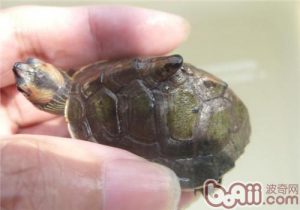
Indian Roofed Turtle
The Indian Roofed Turtle (Kachuga tecta) is one of the more common roofed turtles, recognizable by the distinctive raised black keel on its shell. Native to the rivers of the Indian subcontinent, it is a timid aquatic turtle that can enter hibernation.

Hilaire’s Toadhead Turtle
Hilaire's Toadhead Turtle (Phrynops hilarii) is a side-necked turtle in the toadhead genus, strongly affected by ambient temperature and closely tied to it in behavior. Delicate and hard to keep in captivity, it is not recommended as a first turtle.

Travancore Tortoise
The Travancore Tortoise (Indotestudo travancorica) closely resembles the Burmese Star Tortoise in appearance and shares its preference for a dry habitat. Though sometimes considered a subspecies of the Burmese tortoise, this has never been confirmed; it is a shy, inactive tortoise suited to simple husbandry.