Search Results
6133 results for “FIC”

Why Is My Dog Constantly Shivering
Constant shivering in dogs can signal fear, cold, poisoning, or illness. A scared or cold dog needs comfort and warmth; poisoning (from plants like morning glory or cleaners) brings foaming and stiffness and needs emergency vet care; underlying disease such as distemper, epilepsy, or kidney failure also causes trembling. If the cause is unclear, see a vet.

Orthopsittaca manilata
The Red-bellied Macaw (Orthopsittaca manilata) is relatively large among small parrots, with a body almost entirely covered in beautiful green feathers. Its featherless, striped face resembles a painted Beijing-opera mask and can turn red when excited. It feeds almost exclusively on the fruit of one special palm tree.
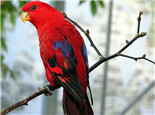
Red Lory
The Red Lory is beautiful from every angle and is very common in Taiwan, especially in bird shops where Red Lory chicks are often seen. It is a fairly noisy parrot whose occasionally piercing calls can be unbearable, so before buying an adult, first assess whether your home environment suits such a noisy species.
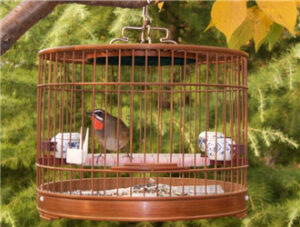
Siberian Rubythroat
The Siberian Rubythroat (Luscinia calliope), also called the Red-throated Nightingale, Red-tailed Robin, or Red-necked Bird, is a typical ground-dwelling bird. Its song is varied and pleasant, with most singing at dawn and dusk, and is especially beautiful.

Yellow-browed Warbler
The Yellow-browed Warbler (Yellow-browed Warbler) is a very active little bird, smaller than a sparrow, with its type locality in India. It is listed in the 'National Protected Terrestrial Wildlife of Beneficial or Important Economic and Scientific Value' directory issued by the State Forestry Administration on August 1, 2000.

Java Sparrow
Wild Java Sparrows have plain plumage, but selective breeding has produced many color variants. Now found worldwide, the Java Sparrow has been bred into various new colors and has become a world-famous cage bird.
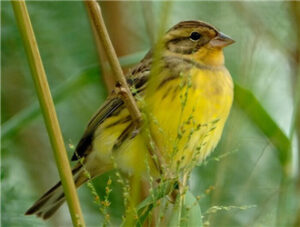
Emberiza aureola
The Yellow-breasted Bunting (Emberiza aureola), also known as the Rice bird, has two subspecies. Due to various causes the species is now endangered and could go extinct within ten years. The state has listed it in the national directory of beneficial or economically and scientifically valuable terrestrial wildlife under protection. It is mainly distributed from northern Europe to Siberia, northern Japan, and China, wintering in India and other regions.

Oriolus
The Oriole (Oriolus), also called 'oriole' or 'golden oriole', is the subject of many poems and is very famous. Females are mainly distributed across the tropical Eastern Hemisphere except New Zealand and the Pacific islands. They breed in eastern China and migrate south to India in winter.
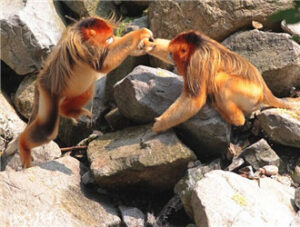
Rhinopithecus
The snub-nosed monkey (Rhinopithecus) is quite rare in number, and as the saying goes, rarity makes things precious, so it has become a rare and endemic animal of China. Because the earliest discovered snub-nosed monkey was the Sichuan golden snub-nosed monkey living in Sichuan, Shaanxi, and Gansu, this genus is generally called the golden snub-nosed monkey, whose English name translates literally as 'snub-nosed monkey.'

Siberian Chipmunk
The Siberian Chipmunk has the habits of storing food and hibernating; hibernation occurs in the wild, while in warm indoor captivity it does not need to hibernate. Wild chipmunks are mainly distributed in North China, Northwest China, and Northeast China. Their fur is of good quality and attractive.