Search Results
850 results for “Disease spread”

Why Did My Rabbit’s Ears Suddenly Flop?
A rabbit suddenly developing 'airplane ears' can come from mixed breeding, disease, or injury. If the ears just flop with no discharge, odor, or trauma, it is likely genetics, since a non-pure upright bloodline droops over time; this is harmless. But if flopping comes with more ear wax, a foul smell, or head shaking, ear mites are likely; isolate the rabbit, disinfect the space, and treat. Rough handling that pulls the ears can also cause it, so learn to hold a rabbit correctly to avoid injury.

What Causes Sepsis in Dogs and How Is It Treated?
Dog sepsis happens when bacteria such as Staphylococcus, Streptococcus, or E. coli multiply in the blood and release toxins, causing body-wide infection. Large skin wounds, bacterial diarrhea, purulent peritonitis, or open fractures can all trigger it. Early signs include fever, lost appetite, vomiting, diarrhea, weakness, rapid breathing, dilated pupils, and abnormal heartbeat. The sooner treatment starts, the better the odds, so see a vet at once if these appear. Treatment uses culture-guided antibiotics, nutritional support, symptomatic care, and restoring acid-base balance.

How to Tell If Your Dog Has Canine Distemper
Canine distemper is a highly contagious, often fatal viral disease. Watch for fever around 40°C or higher, cough, runny nose, vomiting, diarrhea, lethargy, and red swollen eyes. These signs overlap with a common cold, but distemper brings higher fever, lost appetite, cough, eye discharge, and labored breathing, while a cold usually does not. If you suspect distemper, isolate the dog at once and see a vet; treatment uses antivirals, antibiotics, and nutritional support, and early care greatly improves the odds. Vaccination remains the best prevention.

How to Choose a Reliable, Budget-Friendly Dog Dewormer
Owners often swing between over-priced imports and risky unlicensed bargains—both can harm the dog. Deworming is non-negotiable: internal worms steal nutrition and damage the gut, while heartworm stays silent until it is serious, and external pests spread disease to people too. This guide explains why deworming matters, the active ingredients by parasite type (including the Collie warning on ivermectin), and how to choose and use a product safely—spectrum, convenience, credentials, correct dosing, and the myths that lead owners astray.

How to Choose a Dewormer for Dogs
Most dogs meet parasites at least once, and fleas, roundworms, and heartworm are among the most common. Deworming is not a gimmick, yet three myths—indoor dogs are safe, price equals quality, one dose lasts half a year—lead owners astray. This guide covers the three standards for choosing (spectrum, safety, value), the Collie caution with ivermectin-class drugs, and a sensible schedule: monthly external and combined coverage, internal every three months for adults, and vet-guided care for puppies, pregnant, or sick dogs. Low price need not mean low efficacy.
Silver Celestial Eye Goldfish
The Silver Celestial Eye Goldfish is a variety of Dragon-back goldfish whose eyeballs protrude from the sockets and turn upward and forward toward the sky, hence the name sky-gazing eye. It is a relatively rare goldfish variety.

Mosquitofish
The mosquitofish is mainly from the southern United States and northern Mexico and has spread into lowland waters south of the Yangtze. It feeds mainly on small invertebrates and mosquitoes, hence the name.
Lloyd’s Lyretail
The Lloyd's Lyretail reaches 4–5 cm and is native to East Africa. Called one of the world's most beautiful tropical fish, it is also very hard to keep, among the hardest. Sensitive to hard water, its environment must be carefully managed.
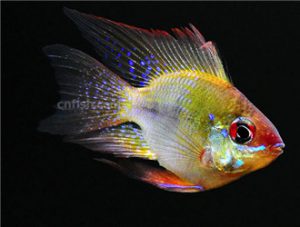
Ram cichlid
The Ram Cichlid originated from the Venezuelan Rainbow Cichlid and was developed into the Ram Cichlid after refinement in the Netherlands and Germany. It belongs to the same genus as the Bolivian Ram, but the Ram Cichlid is more brightly colored and is very popular among aquarists.

Eastern Box Turtle (Carolina Box Turtle)
The familiar Carolina box turtle of eastern North America - high-domed, fireworks-patterned, and a classic (if pricey) beginner-terrestrial box turtle. Loves soaking but cannot swim.