Search Results
801 results for “Cat Behavior”

Why Do Cats Hug Your Legs?
When a cat wraps itself around your leg it can signal different things: security, affection, joy, a request to play, a plea for protection, gratitude, or even illness. Read the context and your cat's overall condition: an energetic, bright cat is simply happy, while one that seems unwell may be asking for help.

Why Do Cats Roll on the Floor?
A cat rolling on the ground can mean play, happiness, self-grooming, a bid for attention, stress relief, or itchy skin from parasites. Context matters: if the rolling is paired with scratching or skin irritation, check for fleas and treat promptly; if it is purely attention-seeking, more interaction solves it.

Common Bad Habits in Cats and How to Fix Them
Common cat bad habits include biting, picky eating, and disturbing the owner's sleep. Many of these habits form because of the owner's own behavior — playing with hands or giving snacks without limit. Learning the right way to raise a cat is the best way to prevent them.

Why Does a Male Cat Lick His Genitals?
A male cat may lick his genitals to clean himself, relieve stress, during mating season, or because of illness or infection. Grooming or seasonal behavior is usually harmless as long as the area stays clean, but if licking comes with other symptoms such as trouble urinating, it likely signals a medical problem that needs a vet.
Will a spayed female cat still yowl?
Yes, briefly. Hormones linger for months after surgery, so estrus behaviors (calling, spraying) may continue, then fade. Incomplete surgery can cause ongoing calling.
Why does my cat purr when I pet it?
Purring when petted means the cat feels comfortable, happy, and safe. It shows the cat enjoys your touch and loves you — pet more to bond.
How to Correct a Cat’s Biting Habit
Cats bite for reasons like fear, anxiety, or physical and mental discomfort. To reduce biting, learn their body language and habits and act early with socialization training. Never use violence, which only worsens anxiety and aggression; use calm, patient, positive correction instead.
What Your Cat’s Head-Butting Really Means
A cat head-butting you carries rich meaning. It shows closeness and trust by leaving facial-gland scent on you, mimics cat-to-cat social greeting to include you in its circle, seeks comfort and attention when stressed, and marks you as part of its territory. Respond with gentle head or neck strokes to strengthen your bond.
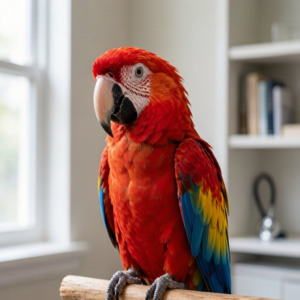
Scarlet Macaw: Traits and Natural Behavior
The scarlet macaw is among the most vividly colored parrots, with a body dominated by brilliant red and accented by yellow, white, and deep blue across the wings and tail. A large, strong black beak easily cracks hard nuts and fruit. These birds live in subtropical and tropical forests, roost high in big trees, and are highly social, gathering in flocks that can top thirty individuals. Understanding their size, diet, lifespan, and breeding needs is essential before taking one home.

What Long-Term Caging Does to a Cat
Cats are born free spirits and caging them long term harms body and mind. It causes anxiety, fear of people, and odd behaviors like over-grooming or chewing the bars; physical limits lead to stiff joints, muscle loss, obesity, heart risk, constipation, and poor bone development; little contact blunts social skills; suppressed instincts distort natural behavior; and cage life can ruin litter habits and cause odor. Caging should be rare and short, only for health or safety limits. Instead, cat-proof the home with mesh on windows and doors, give a cat tree and scratcher, litter-train, and let the cat roam free with your company.