Search Results
273 results for “Cat Behavior”
How to Stop Destructive Behavior in Cats
Cats may tear things up out of boredom, excess energy, or a bid for attention, so the fix must match the cause. Provide stimulating toys and play, set clear rules and stop bad acts with a sound or spray, and give regular companionship so they don't act out from loneliness. If the damage is deliberate, scold in the moment and withhold attention if it's attention-seeking; for safety-affecting behavior, consult a vet or behaviorist. Enough love, structure, and interaction let a cat thrive.

Understanding Aggressive Behavior in Cats
Given their size, cats can be formidable opponents. Unlike dogs, cats have three weapons: an open mouth with sharp teeth and four dexterous paws with needle-like claws, making them harder to control.
How to Correct a Cat’s Biting Habit
Cats bite for reasons like fear, anxiety, or physical and mental discomfort. To reduce biting, learn their body language and habits and act early with socialization training. Never use violence, which only worsens anxiety and aggression; use calm, patient, positive correction instead.
What Your Cat’s Head-Butting Really Means
A cat head-butting you carries rich meaning. It shows closeness and trust by leaving facial-gland scent on you, mimics cat-to-cat social greeting to include you in its circle, seeks comfort and attention when stressed, and marks you as part of its territory. Respond with gentle head or neck strokes to strengthen your bond.
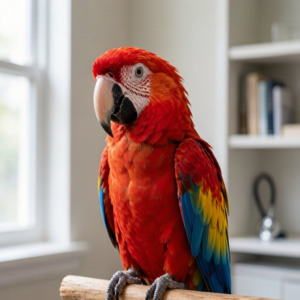
Scarlet Macaw: Traits and Natural Behavior
The scarlet macaw is among the most vividly colored parrots, with a body dominated by brilliant red and accented by yellow, white, and deep blue across the wings and tail. A large, strong black beak easily cracks hard nuts and fruit. These birds live in subtropical and tropical forests, roost high in big trees, and are highly social, gathering in flocks that can top thirty individuals. Understanding their size, diet, lifespan, and breeding needs is essential before taking one home.
What Long-Term Caging Does to a Cat
Cats are born free spirits and caging them long term harms body and mind. It causes anxiety, fear of people, and odd behaviors like over-grooming or chewing the bars; physical limits lead to stiff joints, muscle loss, obesity, heart risk, constipation, and poor bone development; little contact blunts social skills; suppressed instincts distort natural behavior; and cage life can ruin litter habits and cause odor. Caging should be rare and short, only for health or safety limits. Instead, cat-proof the home with mesh on windows and doors, give a cat tree and scratcher, litter-train, and let the cat roam free with your company.
Why Is Your Cat Withdrawn or ‘Autistic’?
A cat that seems 'autistic' or withdrawn may have a congenital communication disorder, or may have become so from abuse, a cold or distant owner, long-term caging, or past trauma and fright. Signs include little curiosity, isolation in corners, dulled reactions, sleep and appetite loss, and in severe cases self-harm. These cats need extra love and companionship, gentle interaction, and confidence-building, and should never be abandoned, since a withdrawn cat struggles to survive outdoors.

How to Help Cats and Dogs Get Along
To keep cats and dogs friendly, consider their temperaments before adding a pet, avoiding two short-tempered animals together, and guide them to build a good relationship. Give each its own bowls and enough food and water, and let each have its own territory to avoid fights over resources and space.

Why Does Your Cat Keep Pushing Things Off the Table?
When your cat knocks your cup or pen to the floor, it isn't pure mischief. A 2019 Cornell study found domestic cats keep about 80% of their wild hunting instinct, so they treat desk objects as "motionless prey" and the push is a mock hunt, especially for round things that roll like escaping prey. Cats are also smart readers of your mood; any big reaction, scolding or a wry laugh, teaches them that pushing things earns attention, and bad attention beats being ignored. Frequent exploring is actually a mental-health sign. Curb it with a designated play zone, daily hunting games, ignoring the act, and physically securing valuables.
Do Cats Hold Grudges After Being Hit? (Why You Shouldn’t Hit Them)
Many owners think a single hit is no big deal, but cats have strong short-term memory for painful or frightening events. A kitten may not "hold a grudge" but will remember being hurt and slowly lose trust, hiding whenever it sees you. Adult cats remember even more and are quicker to resent. Hitting rarely teaches a lesson, since only a few very smart cats grasp your intent. Signs of a grudge include refusing touch, destroying things, inappropriate elimination, counter-attacking, or running away. The fix is to stop all physical punishment, rebuild trust with treats and play, and correct with a firm voice, time-out, rewards, or a mother-cat style neck tap instead.