Flat-Coated Retriever
2 Photo Gallery
1 Breed Introduction
Flat-Coated Retriever (details)
The Flat-Coated Retriever is a versatile hunting dog originating in the 19th century. Bred from the Labrador and Newfoundland (details), American breeds, it can be described as ‘powerful but not heavy, lively but not slight.’ A very intelligent, lively breed. As helpers to European and American fishermen, retrievers have a history of centuries, and marksmen came to value them.
The Flat-Coated Retriever developed from a special retriever crossed from Newfoundland, setter, sheepdog, spaniel, and other water dogs, aiming to produce a dog that could find, locate, swim, and retrieve waterfowl. In the mid-19th century this cross produced the curly-coated retriever, the Flat-Coat’s forerunner.
Some breeders thought curls hindered water resistance, so they bred smooth-coated dogs, resulting in today’s Flat-Coated Retriever.
2 Physical Characteristics
Flat-Coated Retriever (details)
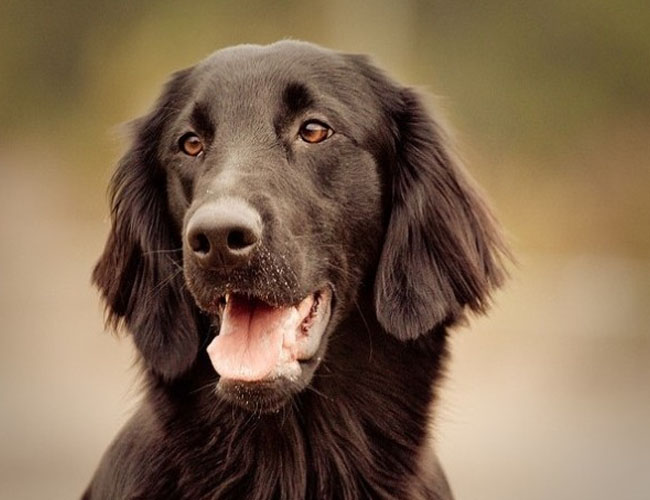
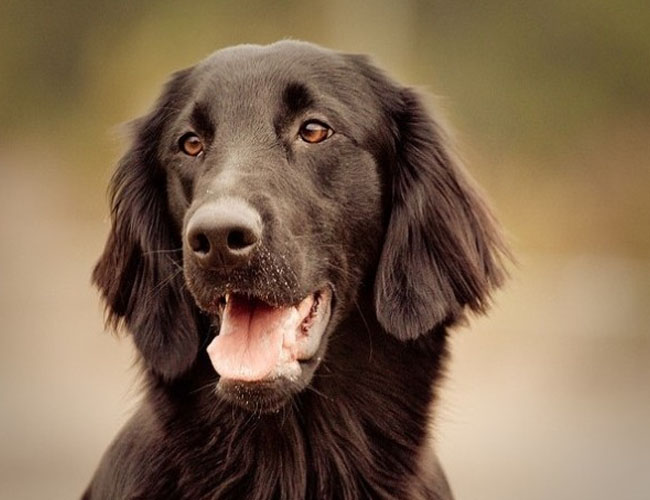
The body is solid and tidy. Ideal male height 23-24.5 inches, female 22-23.5 inches. As a retriever working in harsh conditions, it looks lean. The head is long and clean, expression alert, intelligent, friendly. Eyes medium, almond, dark brown or hazel, well-set apart.
Ears relatively small, well-placed; nose large with open nostrils, color matching coat—black for black dogs, liver for liver dogs. Lips fairly tight, firm, clean, dry.
Neck strong with slight arch; neck coat not trimmed; topline strong and level; loin strong, muscular, supple; hips moderately wide, muscular. Tail straight, moderate set, lifted cheerfully in motion but not curled.
Front legs straight and strong, moderate bone of good quality; feet oval or round, toes arched and tight, pads thick. Hindquarters powerful, angled to match front. Coat moderate in length and thickness, protective in any condition; feathering not too long.
Color is solid black or solid liver. Movement is steady, flowing, elegant. Good build and quality make a hard-working breed.
3 Temperament
Flat-Coated Retriever (details)
Lovable and friendly are its traits; it always wants to go out and play, and is very friendly to other dogs, pets, children, even strangers—a great companion. Though active and outdoorsy, with proper training it is quiet and calm indoors.
Wagging is its way to show affection or greet you. It keeps these traits and a young, happy look into old age. A fine choice for a companion dog.
4 Care and Grooming
Flat-Coated Retriever (details)
The coat protects in any climate and needs little trimming; if feathering is not long, normal daily care suffices. Bathing need not be too frequent and changes by season.
In sudden weather changes, avoid bathing; unlike people, dogs shed and grow coat to adapt. In rainy or humid summer weather, bathing is unsuitable—after a bath pores open, coat oils reduce and cannot recover quickly, losing natural protection and inviting disease.
Bathe in the morning or noon, then dry the body with a towel and a dryer. Never let it air-dry.
5 Feeding Tips
Flat-Coated Retriever (details)
Many owners casually feed pets extra food, harming rather than helping. There was news of a dog poisoned by grapes. Not everything can be shared with your dog.
Even if you give snacks, use dog-formulated ones and not too many. Let the dog know kibble is its staple, or it may become picky.
Normally train it to refuse food, so on walks or against ill-intentioned people it will not eat freely.
Only with the owner’s care and the dog’s cooperation can it grow healthy.