Clown Loach
2 Photo Gallery

1 Species Overview
Also known as the Crown Loach or simply ‘Clown,’ the clown loach can reach 30 cm in the wild but typically only grows to about 10–12 cm in an aquarium. With its gentle temperament, it should not be housed with aggressive species.
Common name: Clown Loach
Kingdom: Animalia
Phylum: Chordata
Class: Actinopterygii (ray-finned fishes)
Order: Siluriformes (catfishes)
Family: Callichthyidae (armored catfishes)
Subfamily: Loricariinae
Distribution: Sumatra and Kalimantan (Borneo), Indonesia
2 Appearance & Physical Traits
The clown loach is a very docile and easy-to-care-for ornamental fish. Its appearance is quite distinctive, but as a small bottom-dweller, its activity range is somewhat limited. So what makes the clown loach’s appearance special?
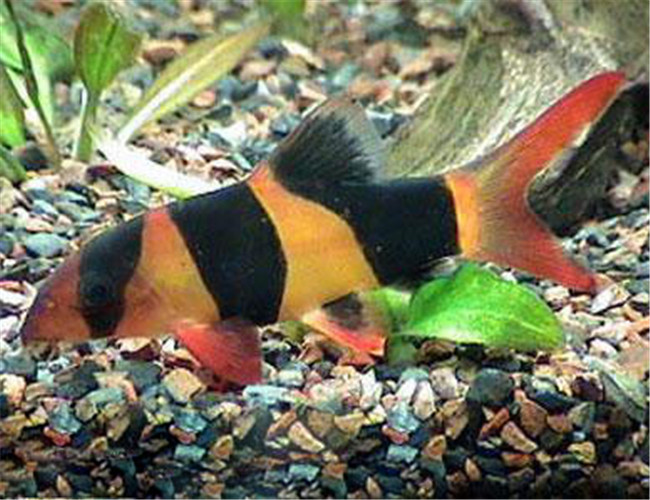
In the wild, clown loaches reach up to 30 cm, but in the aquarium they rarely exceed 10–12 cm. Their body is yellow with three bold black vertical bands. The pectoral, pelvic, and caudal fins are reddish-orange. They have a gentle, timid personality. Note that they possess a sharp spine beneath each eye, which can be erected when threatened—but it offers little real defensive value.
3 Habitat & Living Environment
Caring for clown loaches is relatively easy, and thanks to their gentle nature, they can be kept alongside other peaceful community fish. Water quality requirements are not strict, so how should you set up their environment?
In their natural habitat clown loaches grow to 30 cm, but aquarium specimens reach only about 10–12 cm. They have no special water chemistry preferences—clean, well-oxygenated water is sufficient. Temperature should not fall below 24°C. They thrive in oxygen-rich water with an optimal range of 24–28°C, and spend most of their time foraging near the substrate.
4 Feeding Guidelines
For feeding clown loaches, choose a quality sinking pellet formulated for loaches. Bloodworms and tubifex worms are their favorites, and brine shrimp make an excellent supplement. As bottom-dwellers with a strong appetite, they are not picky eaters but compete fiercely for food.
Clown loaches are active at the bottom of the tank and prefer animal-based live foods. When feeding live prey, always rinse and disinfect thoroughly to prevent bacterial infections and disease transmission.