Taihang Mountain Rabbit
2 Photo Gallery

1 Taihang Mountain Rabbit Breed Overview
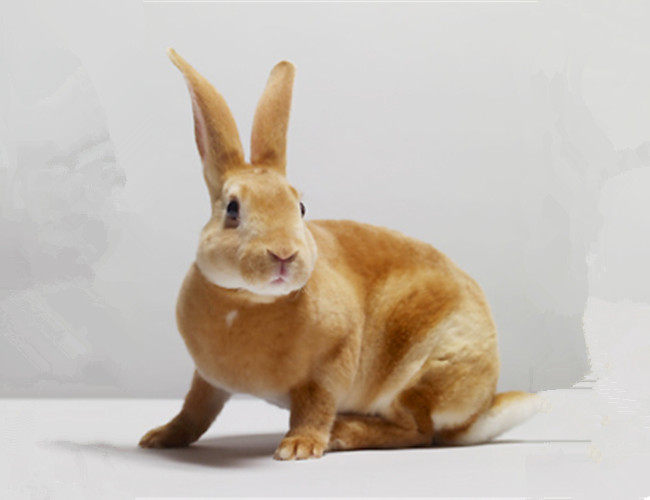
The Taihang Mountain Rabbit is a man-made meat rabbit breed, large when mature, with a yellow coat—hence also called the Tiger-skin Yellow Rabbit. It grows fast, has a high meat yield, and tolerates coarse feed, making it well suited to rural introduction and raising.
Chinese name: Taihang Mountain Rabbit
Chinese alias: Tiger-skin Yellow Rabbit
Kingdom: Animalia
Phylum: Chordata
Class: Mammalia
Order: Lagomorpha
Family: Leporidae
Genus: Oryctolagus
Species: Taihang Mountain Rabbit
Place of origin: Jingxing, Luquan (formerly Huailu County), and Pingshan counties of Hebei Province, China, bred jointly by Hebei Agricultural University and Hebei Provincial Foreign Trade Food Import & Export Company, among others.
Reproduction: Viviparous.
Body traits: Whole body chestnut-yellow, belly light white (another type has deeper yellow with black-tipped hairs on the hindquarters and back); ears short, thick, and upright. Average adult weight 4.3 kg.
Diet: Herbivorous.
2 Physical Characteristics of the Taihang Mountain Rabbit
The Taihang Mountain Rabbit’s appearance is close to that of a yellow rabbit, as it too has a yellow coat. Its muscles are compact with a relatively large frame—typical of a meat rabbit—with thick, upright ears.
I. Appearance of the Taihang Mountain Rabbit
The whole body is chestnut-yellow, belly light white (another type has deeper yellow with black-tipped hairs on the hindquarters and back); ears short, thick, and upright. Average adult weight 4.3 kg. Refined head, short thick upright ears, compact body, wide level back and loin, sturdy limbs, solid constitution. Adult weight: bucks average 3.87 kg, does 3.54 kg; strong disease resistance, tolerant of coarse feed, suited to farm raising.
II. Traits of the Taihang Mountain Rabbit
The Taihang Mountain Rabbit has stable genetics, high fertility, is a good mother with strong lactation. Produces 5–7 litters per year; average kits per litter: standard type 8.2, medium type 8.1. Kits grow fast. Tests show that on a complete mixed feed, daily gain equals the Belgian rabbit, while dressing percentage exceeds it.
3 Taihang Mountain Rabbit Care Tips
The most important part of Taihang Mountain Rabbit care is disease prevention. Rabbits have high resistance to disease but low defense—what does this mean? Generally a rabbit rarely falls ill, but once it does, the chance of a cure is small, so prevention matters more than treatment.
I. Reasonable site and housing selection
The Taihang Mountain Rabbit farm site directly affects the herd’s growth. The site should be sheltered from wind and facing sun, dry, and well-ventilated, with convenient water supply and drainage. The floor and exercise yard should be hardened, preferably with cement, with some drainage slope. Cage raising is encouraged where conditions allow.
II. Regular disinfection
Clear droppings promptly; disinfect cages, equipment, and yards regularly to kill pathogens in the environment. Use 3%–5% Lysol, 1%–2% hot caustic soda, or 15%–20% lime water for spraying, and keep outsiders from entering at will.
III. Timely vaccination
Rabbit viral hemorrhagic disease (commonly called rabbit plague) is a severe infectious disease threatening Taihang Mountain Rabbit farming. It strikes fast, spreads quickly, has high fatality, and occurs year-round. There is no effective cure; vaccination is the only reliable prevention. Method: inject 1 ml subcutaneously on the inner thigh; kits under 3 months get half; immunity lasts six months. Those missed must be vaccinated promptly.
4 Taihang Mountain Rabbit Living Environment
The Taihang Mountain Rabbit is a meat rabbit breed, so in raising it, fattening is important—and fattening depends not only on food but also on environment layout. So what environment better suits fattening?
After long domestication, the Taihang Mountain Rabbit has changed greatly in body, appearance, and quality, yet retains some wild habits—nocturnal activity, timidity, and a love of burrowing. Therefore, meat rabbits gain weight faster in dim environments.
Experiments show that under the same feeding standard and feed, meat rabbits kept in dimmer cages for 6 months weigh 250–350 g more than those in south-facing, brightly lit cages with identical conditions. Meat rabbits kept dim and quiet all day change the habit of dozing by day and ignoring food while active and hungry by night; day and night feeding become more balanced. Also, in dim cages they cannot clearly see outside light, people, animal activity, or environmental changes, so stress is low, they are not startled, stay calm, eat more, digest better, and gain faster.
Fattening meat rabbits in dim environments is a simple, effective measure. But because the Taihang Mountain Rabbit lacks ample sunlight long-term, to ensure healthy growth note two points: first, keep cages clean and increase disinfection frequency to prevent disease spread; second, ensure complete feed nutrition, especially adequate full-spectrum vitamins and minerals.
5 Taihang Mountain Rabbit Feeding Guidelines
In feeding the Taihang Mountain Rabbit, achieving maximum economic benefit with minimum feed is important—saving costs while expanding returns. This is when you learn to fatten the rabbit; how exactly?
The Taihang Mountain Rabbit’s fattening methods are roughly two: kit fattening and adult fattening. Kit fattening means starting to fatten right after weaning. At the start, group grazing gives kits enough exercise to build health and bone/muscle growth. After 10–15 days, switch to cage fattening for 30–35 days; at 2–2.5 kg it can be slaughtered. Adult fattening means culled breeding rabbits get a short fattening before slaughter to add weight and improve meat. Fattening no more than 30–40 days, adding 1–1.5 kg. Fattening techniques:
1. Little-and-often feeding: During fattening, reduced exercise and concentrate-based feed usually lower appetite. To stimulate it, feed little-and-often to increase intake.
2. Fattening feed: Mainly concentrate with greens as supplement. Best fattening feeds are corn, barley, tofu residue, bran, and sweet potato, with added bone meal, salt, and other mineral supplements. Require feed with 15% fiber, 17% crude protein, 2.5% fat.
3. Careful management: During fattening, lack of exercise and light weakens resistance and invites disease, so manage carefully—regular checks and cleaning, ensuring the Taihang Mountain Rabbit eats, drinks, and rests well with good health.
4. Castration fattening: Castrated bucks gain 15% better and consume less feed; usually castrate at 8–10 weeks.
5. Restricted exercise: Especially late-stage fattening rabbits should have exercise limited—best kept in a small cage just big enough to hold them—to promote weight and fat gain.