Pearl Stingray
2 Photo Gallery
1 Breed Profile
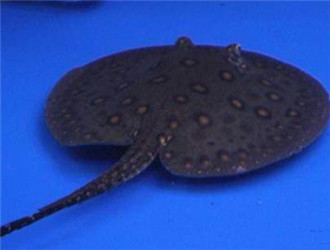
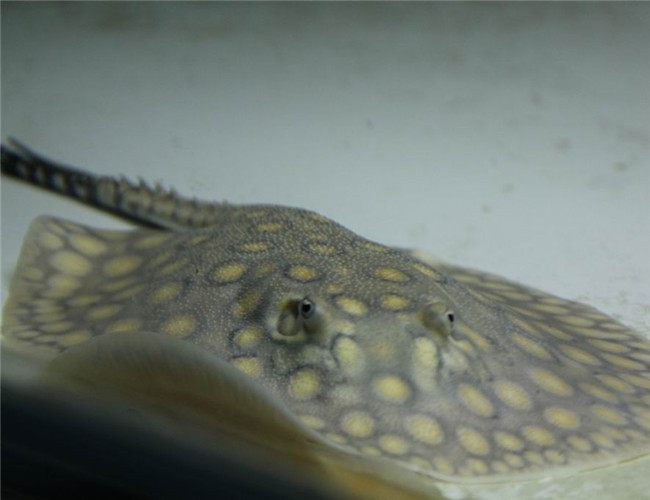
The Pearl Stingray, also called the Amazon River Stingray, is a common stingray in aquariums. Its charming pattern of round cream spots scattered like pearls gives the name ‘Pearl Stingray’.
Chinese name: Pearl Stingray
Also known as: Amazon River Stingray
Kingdom: Animalia
Suborder: animals
Family: fish
Distribution: Brazil, Peru, Colombia, Amazon basin, Orinoco River, Paraguay River basin
2 Appearance
A precious, protected fish; most seen in aquariums. Large, so few are kept at home.
The Pearl Stingray (Potamotrygon motoro) disc reaches 50 cm, covered with pearl-like dots, easy to identify. Variation and hybridization yield many commercial names: Pearl Stingray, Crown Pearl, White Jade Pearl, Tricolor, Imperial Tricolor, Colombian Tricolor. It has a good body and flexible movement; many keep it as ornamental. The belly is pure white; it stays on the bottom year-round, sometimes burrowing into mud.
3 Husbandry
Often confused with the manta (devil ray); the true manta has no tail and no strong venom, while the Pearl Stingray is venomous. Avoid the toxic spine when keeping.
Suitable 22-26 C, weakly acidic water. Very sensitive to water changes; use old water, never fully replace. If no old water, mix half new and half used, but never add salt. Use fine sand so it can burrow. It is among the Amazon residents’ most feared fish; the tail spine is highly venomous. If you step on one hidden in sand, it is very painful, even fatal. They dig round pits in shallows to hide; wade carefully. If stung, pull out the spine and apply wound medicine to prevent infection.
4 Feeding
Avoid the toxic spine when keeping; it is venomous. Large, so note feeding care.
Healthy ones are very active and eat a lot. Only carnivorous food: small fish, shrimp, loach, bloodworms, chopped fish, shrimp meat. Remove shrimp head spines; kill loach before feeding (live loach can survive being swallowed and cause digestive trouble). No satiety sense; feed small frequent meals, not overfeed – it is robust but poor at tolerating medication, and illness is hard to treat.
Many die from overfeeding causing digestive inflammation. For sensitive types like the Imperial Tiger Stingray, use planting tweezers to feed single fish, controlling amount and enjoying the process.