Speckled Cape Tortoise
2 Photo Gallery
View All 8 Photos


1 Overview
Like most wild tortoises, the Speckled Cape Tortoise lives sheltered among rocks, but it is an unusual species because during both excessively hot and excessively cold seasons it enters a dormant state as a form of self-protection, until temperatures return to its liking.
The typical wild behavior of the Speckled Cape Tortoise is to spend most of its time hidden beneath cover such as rocks. Its most active season is generally spring; in autumn or early spring it usually uses the warm morning sun to digest food, while in winter and summer it remains dormant and almost completely inactive, making it a rather boring tortoise to keep in captivity.
Chinese Name: Speckled Cape Tortoise
Alias: Speckled Padloper
English Name: Speckled Cape Tortoise
Scientific Name: Homopus signata
Distribution: South Africa
Reproduction: Oviparous
Size: 7.5 to 10 cm
Price: Not available
Activity: In its habitat, August to October is spring and its most active period. Although active in spring, nights are still extremely cold and dawn often brings frost.
2 Physical Characteristics
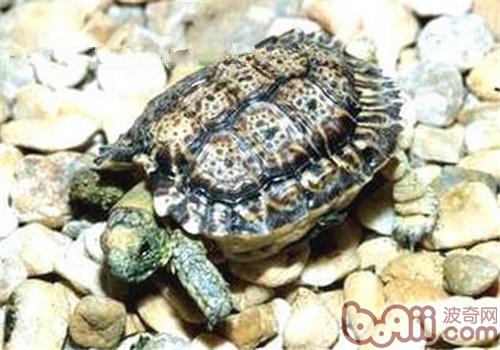
As its name suggests, the Speckled Cape Tortoise has many speckles on its carapace. Indeed, its shell looks as though ink spots were splashed across a spider-tortoise pattern. The head is somewhat long and pointed, and the head markings are not prominent, though speckled scars are still visible.
The Speckled Cape Tortoise is found in parts of Namaqualand and the western Cape, with a range roughly from the Orange River in the north to the Piketberg area of the Cape Province in the south, and westward along the Atlantic coast to the Calvinia region in the east. Its distribution lies mostly in rocky areas, where it spends most of the year hidden beneath rock crevices, entering dormancy during hot and cold seasons. In its habitat, August to October is spring and its most active period; although active in spring, nights are still extremely cold and dawn often brings frost.
The carapace pattern of the Speckled Cape Tortoise is clear but irregular, appearing as blocky radiating markings. Where the carapace meets the head there is a small protective shield that looks like two little horns, very cute. The speckles on the carapace are likewise irregular but tend to cluster at a point.
3 Care & Husbandry
The typical wild behavior of the Speckled Cape Tortoise is to spend most of its time hidden beneath cover; its most active season is generally spring. In autumn or early spring it usually uses the warm morning sun to digest food, while in winter and summer it remains dormant and almost completely inactive. To keep them successfully, the environment should mimic the wild as closely as possible, as wild Speckled Cape Tortoises typically mate only in early spring.
4 Habitat & Environment
In its natural environment the Speckled Cape Tortoise is sensitive to temperature; its environmental requirements are high, which is why it enters a self-imposed resting state in both winter and summer, being active only during the spring months. This should be considered when setting up its enclosure.
When keeping the Speckled Cape Tortoise, natural factors should be considered. Rocks or wood can be placed in the enclosure for hiding. The light cycle is generally about 14 hours in summer and about 10 hours in winter, with different temperatures for the two seasons: the summer hotspot is around 32 degrees C, while the winter hotspot is about 25 degrees C. For hatchlings, a winter temperature of around 30 degrees C is essential. In the wild the tortoise’s habitat is humid, so the enclosure must be misted regularly or provided with a water dish to maintain adequate humidity.
Beginners refers to those keeping a tortoise for the first time, including those who previously kept aquatic turtles. Tortoises are a distinct group within turtles; differences in form, habits, and environment mean their care differs from aquatic turtles and cannot simply follow aquatic-turtle methods. Beginners in particular should operate carefully to avoid losses both emotional and financial.
5 Diet & Nutrition
The Speckled Cape Tortoise is not demanding about food; usually, like other tortoises, it is herbivorous, but in captivity it will not like all grass-type foods, so food selection matters. In fact, depending on the individual, food can be offered selectively.
The Speckled Cape Tortoise has very specific dietary needs. Apart from the special drought-tolerant plants of its native range, it adapts poorly to ordinary fruits and vegetables in captivity, making food selection tricky. It is best to feed primarily cactus-type foods, with cucumber as a substitute; other items such as carrots, pumpkin, and leafy greens must be tried one by one to discover preferences, otherwise keeping it well is quite difficult. It is highly drought-tolerant, so the enclosure must be kept very dry, with a substrate of dry reptile sand or sandy loam, and plenty of rocks for shelter. A water dish should be provided for drinking, and the tank must be well covered, as the Speckled Cape Tortoise is an adept climber and escape artist.
As for other foods, keepers can add them as appropriate and observe whether the tortoise likes them and watch its droppings; if the droppings become too dry or too loose, that food is unsuitable. Also, calcium supplementation is important for tortoises and cuttlebone can be offered.