Search Results
416 results for “vitamin deficiency”
How Long Does It Take for a Puppy’s Rickets to Heal?
With timely treatment a puppy's rickets generally heals in 1 to 3 months. It is mainly caused by vitamin D deficiency and calcium-phosphorus imbalance.
How long does it take a calcium-deficient, limping dog to recover?
Limping from low calcium often improves within a week of supplementation, with full recovery in 1-3 months. Mild cases need diet plus vitamins; severe cases need vet-guided calcium.
Why are my bearded dragon’s limbs weak and dragging despite calcium and UVB treatment?
Weak limbs in a bearded dragon are usually from calcium deficiency, though rarely paralysis. Calcium supplementation after deficiency is slow; keep it up with UVB and add vitamin D3 for absorption.

Japanese White Rabbit
The Japanese White Rabbit is essentially the large white rabbit grown in Japan, also called the Japanese Large White. Said to descend from a cross of Chinese and Japanese white rabbits, it is a common breed mainly used for production. It matures early, grows fast, tolerates coarse feed, is a good mother with strong fertility, and is often used as a "foster mother" rabbit.

Double-eyed Fig Parrot
The Double-eyed Fig Parrot is a tiny, charming parrot from Indonesia, New Guinea, and Papua New Guinea. Scarce in captivity and difficult to breed, it needs careful husbandry and is sensitive to cold, stress, and vitamin K deficiency.
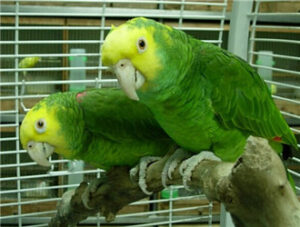
Double Yellow-headed Amazon
The Double Yellow-headed Amazon is a striking parrot with a yellow head, native to Central America and Mexico. A strong talker and affectionate pet, it is now threatened in the wild by habitat loss and trapping, with some subspecies listed as protected.

Harbin White Rabbit
The Harbin White Rabbit is a Chinese meat-and-fur breed adapted to cold northern climates, with a large, sturdy white body. Mainly raised as an economic animal, it has strong adaptability and high reproduction and dressing rates, though weaker disease resistance calls for prevention-first care.

How to Store Cat Food Properly
Proper storage protects cat food's nutrients and your cat's health: keep it cool and dry, refrigerate opened cans and use within 2 to 3 days, discard anything past its date, and don't leave food in the bowl beyond a couple of hours.

Why Are a Chinchilla’s Teeth Turning White, and What to Do
Normal chinchilla teeth are yellow to orange; white teeth usually mean calcium lack (low calcium, phosphorus, vitamins A/D), which also weakens bones and risks fractures. Fix with calcium syrup or child calcium tablets plus alfalfa and sun; prevent with quality pellets, extra calcium for pregnant and lactating females, and no over-supplementing.

What Causes a Cat to Lose Its Whiskers?
Cats lose whiskers from normal shedding (kittens and seniors), skin disease, or nutritional deficiency. Whiskers are a sensing and measuring organ — never cut them. Keep a balanced diet and a clean environment, and see a vet if hair loss or redness appears with the whisker loss.