Japanese White Rabbit
2 Photo Gallery

1 Japanese White Rabbit Breed Overview
The Japanese White Rabbit is essentially the large white rabbit grown in Japan, also called the Japanese Large White. Said to descend from a cross of Chinese and Japanese white rabbits, though this cannot be verified. It is a common breed mainly used for economic production. It matures early, grows fast, and tolerates coarse feed; it is a good mother with strong fertility and is often used as a “foster mother” rabbit, with good meat and excellent pelt quality. Its main drawback is a larger frame with less full carcass, giving lower dressing and meat percentages.
2 Physical Characteristics of the Japanese White Rabbit
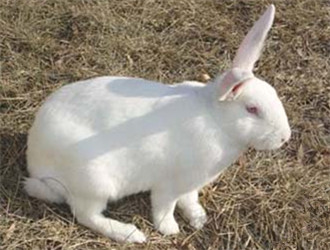
The Japanese White Rabbit looks large, especially its pair of big ears, spread in a “V” atop the head—wide, thick, and long. The whole coat is white with no other color, the eyes are red, and the coat quality is ordinary.
I. Features of the Japanese White Rabbit
The Japanese White Rabbit has pure white fur and red eyes; does have a dewlap under the throat, and the ears are especially long and large, willow-leaf shaped. The body is rectangular; there were once large, medium, and small types, but Japan’s unified standard is 4.8 kg at 8 months, ear length under 18 cm, dense underfur about 2.5 cm long, a robust constitution, strong fertility, and a reputation for excellent pelt and meat quality.
II. Body size of the Japanese White Rabbit
The Japanese White Rabbit has high fertility, a robust constitution, tolerates coarse feed, and is cold-hardy with strong adaptability. It is larger with faster growth and development, reaching 3.5–4 kg as an adult. Raised throughout China. It has large, thin ears with fine roots and pointed tips, willow-leaf shaped, upright backward, with a visible network of blood vessels—ideal for injection and blood collection, making it a perfect rabbit for experimental research. It has a broad forehead and full face, white dense soft fur, red eyes, a large pelt area of good quality, a thick neck, and does have a dewlap under the neck.
3 Japanese White Rabbit Care Tips
The Japanese White Rabbit’s care focus differs by season. Due to weather changes, cool and shade in summer, keep warm in winter; in spring and autumn, on the basis of molting, do the breeding work of the parent rabbits to ensure next season’s economic returns.
I. Spring care points
Spring is a season of frequent rabbit diseases, so pay attention to sanitation. Hutches must be clean and dry; clean daily, remove droppings, rinse feeders. Keep the hutch odor-free with no accumulated waste. Wash and disinfect feeders, cage floors, and nest boxes often; for indoor caged rabbits ensure good ventilation, and spread plant ash or lime on the ground for disinfection and moisture control.
II. Summer care points
In summer, high temperatures, much rain, and high humidity—because the Japanese White Rabbit’s sweat glands are underdeveloped, heat reduces appetite, and this season poses the greatest threat to kits and young rabbits. First, prevent heat and cool down; second, feed carefully with more feed and ample water; third, maintain cleanliness—mix concentrated feed with cool water freshly at each feeding, and store leftovers in a cool, ventilated place.
III. Autumn care points
Autumn is clear and dry with ample feed—a good season for raising the Japanese White Rabbit. Seize autumn breeding and fattening. But adults enter molt; molting rabbits are weak with reduced appetite, so provide more greens and appropriately some high-protein feed. The large day-night temperature swing in autumn easily causes colds, pneumonia, and enteritis in kits and young rabbits, so watch temperature changes. Herded rabbits should be driven back indoors at dusk; on windy or rainy days or when cooling, do not let them exercise outside.
IV. Winter care points
In most of northern China winter is cold with much wind and snow; winter warmth is the focus. First, strengthen cold-proof measures; second, strengthen feeding; third, increase exercise—caged rabbits should exercise weekly on sunny, low-wind days in a sunny, sheltered exercise yard, a few times for two hours each; pit-kept rabbits with poor light should also be exercised in sun at least twice weekly.
4 Japanese White Rabbit Living Environment
Most of China’s land has large seasonal temperature swings, a big test for farming. Different seasons, temperatures, and care focuses require very different responses; the following introduces them by season.
I. Keep the environment clean in spring
Spring’s abundant rain and high humidity greatly favor pathogen growth, so keep hutches clean and dry—sweep, clear, scrub, and disinfect often. When the ground is humid, spread plant ash or quicklime to disinfect and kill germs.
II. Cool down in summer
Summer hutches should be shaded and ventilated, not letting sunlight hit the cages directly. When cage temperature exceeds 30°C, splash water on the ground to cool. Open-air rabbit yards should erect shade shelters early and plant melons, grapes, and other climbers; also guard against dampness.
III. Watch extreme weather in autumn
The temperature gap between autumn mornings/evenings and midday is large, and young rabbits easily catch colds, enteritis, and pneumonia. Therefore manage carefully; drive herded rabbits back indoors each dusk, and do not let them exercise outside in wind or rain.
IV. Keep warm in winter
For winter hutch temperature, except for newborn kits, it need not be very warm, but must stay stable—no sudden cold or heat. Indoor caged rabbits should have doors and windows closed to guard against drafts; outdoor caged rabbits should hang straw curtains on cage doors against the cold, and pad the cage floor with straw or other insulating material.
5 Japanese White Rabbit Feeding Guidelines
There are many feed types for the Japanese White Rabbit; raising market rabbits differs greatly from pet rabbits. Market rabbits are usually raised more extensively, so hardier breeds are chosen—the Japanese White Rabbit is a good market-rabbit breed.
I. Green feed
High in moisture, low in fiber, rich in protein, vitamins, and minerals; nutritionally complete, palatable, and digestible—the basic feed for domestic rabbits. Includes cultivated forages, aquatic plants, wild grasses, wild herbs, green leaves, and vegetable leaves.
II. Succulent feed
Includes various tubers and melons. Succulent feed is moisture-rich (75–90% water), low in crude fiber and high in starch, low in protein (only 1–2%), rich in potassium but low in calcium and phosphorus, with very high nitrogen-free extract.
III. Roughage
Low in nutrition, high in crude fiber, low in protein and vitamins. But maintaining some crude fiber supports normal digestive function.
IV. Concentrated feed
Includes grain feed and processing by-products. Grain feed is mainly corn, barley, wheat, oats, rice, and other Poaceae plants, high in nitrogen-free extract, mainly starch. Processing by-products include soybean cake, oil residue, rice bran, bean husk, starch residue, and tofu residue—all good rabbit feeds with high nutritional value.
V. Animal feed
This feed mainly refers to dairy and dairy by-products, fishery by-products, and meat by-products. Characterized by high protein content.
VI. Minerals
Feed used to supplement mineral shortfalls. In the rabbit’s nutrition, natural feed generally meets its needs, especially large amounts of legumes, which rarely cause mineral deficiency.