Search Results
1584 results for “type 2”

Why Is My Dog Unsteady on Its Feet?
A dog that stands unsteadily or wobbles may have several issues: overgrown nails digging into the paw, arthritis, long-term calcium deficiency, muscle strain from too much exercise, or—most seriously—distemper. Most are manageable, but distemper-related weakness means the disease is advanced and needs immediate veterinary care.

Why Do Arowana Develop Dropsy?
Arowana dropsy is common during seasonal changes and is caused by prolonged high temperatures, poor or aged water, high organic loads, or bacterial infection. Symptoms range from blisters on the gill cover (usually non-fatal) to full-body blisters with severe infection and ulceration. Prevention centers on stable temperature and clean water; treatment uses antibacterial medication in food plus strict water management.

Can You Deworm a Cat That Has Soft Stools?
It is generally not advisable to deworm a cat with soft stools, because the medication can further irritate the intestines and worsen the problem. Address the soft stools first—with dietary fiber and probiotics—and only deworm once the stool has returned to normal for about a week. If parasites are the suspected cause, confirm with a fecal test before treating.
What Should I Do If My Cat Eats Rat Poison?
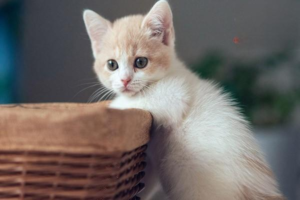
After eating rat poison, a cat may develop a fever, lethargy, loss of appetite, and vomiting, or show internal and external bleeding such as nosebleeds, bloody vomit, bloody stool, or black tarry feces. Because the toxin can severely damage the liver and other organs, seek veterinary care immediately—if none is nearby, induce vomiting at home with hydrogen peroxide, then follow up with IV fluids and bloodwork.

Colorpoint Shorthair
The Colorpoint Shorthair was developed from the Siamese, with red or cream restricted to points (face, legs, ears, tail, and genitalia). Early crosses with domestic shorthairs, refined by concentrating Siamese genes with red, produced the final Colorpoint Shorthairs. Like many CFA breeds, it is a man-made breed. In the 1940s and 50s, breeders risked deciding the beautiful Siamese should come in more than traditional seal and the most common blue point.

Cymric
The Cymric, English name Cymric, is also called the Longhaired Manx or Longhaired Isle of Man cat. From its alias we know it is a longhaired cat; though long-haired, it's not hard to groom. Its most striking feature is having no tail, drawing immediate attention.

Himalayan、Colourpoint Persians
The Persian is a widely known and popular breed; from its early crossbreeding emerged the Himalayan cat. The Persian's early evolution likely occurred on the cold Persian Plateau (today's Iran and Iraq). When Phoenicians and Romans brought these silky-longhaired cats to Europe, Europeans fell for them. Over the years, the Persian's long coat was deliberately retained and emphasized in breeding.

Russian Blue
The Russian Blue, also called Russian Blue, Archangel Blue, or Maltese cat, with English name Russian Blue, is known as the 'aristocrat of shorthairs' and 'elf of winter.' Originating in the 19th century, once only in Russia, now worldwide. Few in number globally; buying one costs at least tens of thousands. Cheap ones are hybrids.

Selkirk Rex
The Selkirk Rex, English name Selkirk Rex, is one of the newest natural breeds, evolved from domestic cats. First from Wyoming, USA, cross-bred with Persians to develop its traits, it can be crossed with Persians, Exotic Shorthairs, British and American Shorthairs. Free of genetic diseases, it is a very healthy cat distinguished by its fully curly coat—even the whiskers curl.

Oriental Shorthair
The Oriental Shorthair is a distinct breed, unexpectedly produced by breeders while developing another cat. They wanted a pure-white Siamese, so crossed Siamese with pure-white cats, producing today's Oriental. Though born in 1962, it was recognized as a new breed in 1972. Its appearance is close to the Siamese but differs greatly in coat color.