Search Results
25 results for “turtle stress”

What Water Temperature Is Best for Snapping Turtles?
Snapping turtles tolerate water from 3 to 45 degrees Celsius, but thrive best between 20 and 30 degrees. Below 18 degrees they stop eating, and below 15 degrees they enter hibernation. Above 30 degrees they may become overactive and suffer dysfunction, with signs like poor appetite and breathing difficulty. Keep the water within a comfortable range and change it regularly, replacing about one quarter to one third each time, to keep quality and temperature stable and support healthy growth.
Why Does a Turtle Keep Scratching the Tank Glass?
A turtle that constantly scratches or claws at the tank glass is usually unsettled by its environment. New arrivals need time to adjust, and a bare tank with strong light, no hiding spots, or loud surroundings makes the turtle feel unsafe and eager to escape. Add plants or driftwood for cover, soften the lighting, keep the tank away from noise and vibration, and give more space when possible so the turtle feels secure.
Which Turtles Are the Most Interactive?
Many turtles are surprisingly interactive, including the Mexican mud turtle, Florida snapping turtle, West African side-neck, yellow-spotted side-neck, western painted turtle, map turtle, musk turtle, helmet mud turtle, Chinese pond turtle, and red-eared slider. The Chinese pond turtle is a native species that adapts well and rarely gets sick. No matter the breed, good interaction depends on learning the turtle's habits, feeding appropriately, and giving consistent, scientific care so the turtle stays healthy.

How to Care for an Alligator Snapping Turtle
Alligator snapping turtles are aggressive, long-lived freshwater turtles that make challenging but rewarding pets. They are mostly aquatic but must come ashore often to breathe, so provide a rock or basking platform. Keep water deep, about two to three times the shell height, with a land area for shelter and sunning. Change only one fifth to one third of the water weekly to avoid shocking them. Feed a varied carnivorous-leaning diet of fish, shrimp, earthworms, lean meat, and insects plus some greens, and keep the temperature steady at 26 to 32 degrees Celsius. Avoid overfeeding and too much fat or salt, and clean the habitat regularly to prevent disease.

How to Treat Water Mold Disease in Turtles
Water mold disease in turtles is best caught early, since most medications only work in the initial stage. The two core approaches are raising the water temperature to 28–30°C, which suppresses the fungus, and dry-docking the turtle so the fungus dies without water. For severe cases, antifungal medications such as povidone-iodine are applied topically. Combined with warmth and dry-docking, these methods give the best recovery, while preventing injury and keeping water warm remain the best long-term defense.
What happens when a turtle gets scared?
When a turtle is frightened it typically pulls its head, limbs, and tail back into its shell and refuses to come out for a long time. Chronic stress can make it skittish and reactive, and in severe cases lead to appetite loss and diarrhea, so newly arrived turtles should be left undisturbed until they settle in.
My turtle just lies there and sleeps all the time – why?
A turtle that stays still and sleeps constantly may be stressed by a new environment, kept in water that's too hot or cold, living in poor water quality, or actually ill. Rule out disease first, then check water temperature - low temperatures trigger hibernation - and in summer change the water often and use a pet-safe disinfectant to prevent bacterial buildup, while feeding high-quality food rich in protein and vitamins.

Asian Giant Turtle
Asia's largest hard-shelled semi-aquatic turtle - a temple favourite, long-lived, and of conservation concern across Southeast Asia.
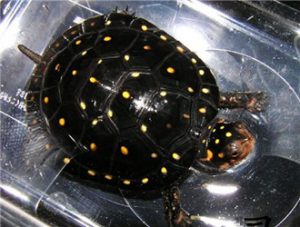
Spotted Turtle
A tiny, starry-spotted North American gem - one of the smallest turtles, beautiful, and of real conservation concern (pricey and declining).
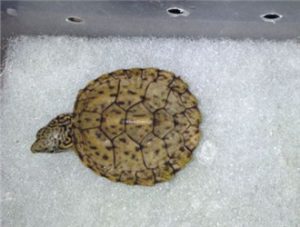
Striped-neck Musk Turtle
A small, secretive musk turtle from the southeastern United States with pale neck stripes and a musky defence - compact and personable.