Search Results
230 results for “turtle shell rot”

Should You Keep a Red-Eared Slider Dry or in Water?
Red-eared sliders are common, hardy pet turtles, but proper care starts with the right setup. They should be kept mostly in water with a land area for basking, while dry keeping is only for sick individuals needing medication. Stable temperature, clean water, varied diet, and disease watch keep them healthy.
Just now it stretched its neck out even longer than in the picture.
A turtle stretching its neck and not eating may be new-environment stress (fast and observe), low temperature below 20C (raise it), bacterial disease like enteritis/shell rot/pneumonia (vet), or a food blockage you can try to remove.

What’s Needed to Keep a Radiated Tortoise Outdoors
Hatchlings suit indoors; adults do better outside with much more space (at least 240×150 cm each). Best where the year-average temperature is ~18°C and never below 16°C. Build a small heated hut with UVB, tall smooth fencing with a locked mesh lid against predators, a planted sandy garden, and a shallow pool. Separate aggressive males.

Common Illnesses of Red-Eared Sliders
Red-eared sliders face several common illnesses: white-eye disease (a white film from poor water), gastroenteritis (odd red-green stools), pneumonia (wheezing, head held high), skin rot, calcium deficiency (soft shell), shell rot, and colds. Most trace to water quality and temperature swings, and many respond to antibiotic soaks or ointments plus warmth and sunlight.

How to Estimate a Red-Eared Slider’s Age
If you did not raise a red-eared slider from a hatchling, you cannot know its exact age, but for young sliders you can estimate it from a few clues. Each round marking on the belly scutes suggests one year, and the number of concentric rings on the shell plus one gives another estimate. Weight and shell length also track age, and clearer, darker shell rings hint at an older turtle. Sliders usually mature at three to four years at over 17 centimeters, after which aging becomes hard to gauge.

Can Tortoises Swim?
Tortoises cannot truly swim. Their body structure is built for land, not water, yet they will not drown instantly if they fall in—their large lungs and broad shell create enough buoyancy to float for a while. That floating ability varies by species; the Aldabra giant tortoise, for example, moves faster in water than on land. But floating is not living: tortoises belong on land, and long soaks risk shell rot and drowning. Keepers should respect this by offering only a shallow soaking area with a ramp, never deep water. Even aquatic turtles can drown if kept too deep, especially as juveniles, so match the habitat to the species.

Matamata
A bizarre, leaf-like ambush turtle from South America with a flattened head and neck fringes - one of the strangest faces in the turtle world.
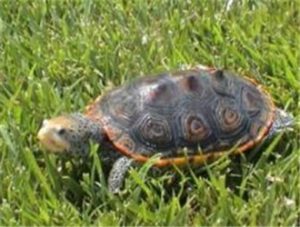
Texas Diamondback Terrapin
The Texas Diamondback Terrapin (Malaclemys terrapin littoralis) is a rare and prized subspecies of the diamondback terrapin. Thanks to conservation, its numbers are rising; the white-skinned 'super Texas' form is considered top quality and can fetch very high prices.
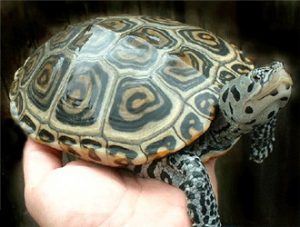
Northern Diamondback Terrapin
The Northern Diamondback Terrapin (Malaclemys terrapin terrapin), the nominate subspecies, is a semi-aquatic turtle native to the brackish estuaries of the U.S. Atlantic coast. Named for the diamond patterns on its shell, it is increasingly popular, reasonably priced, and not hard to keep — but it needs brackish water.

Yellow-bellied Slider
The Yellow-bellied Slider (Trachemys scripta scripta) is a common, hardy and inexpensive North American slider with a yellow belly and yellow 'ear' patches. Easy to keep but a messy, fast-eating carnivore-leaning omnivore.